
Last updated November 4, 2026
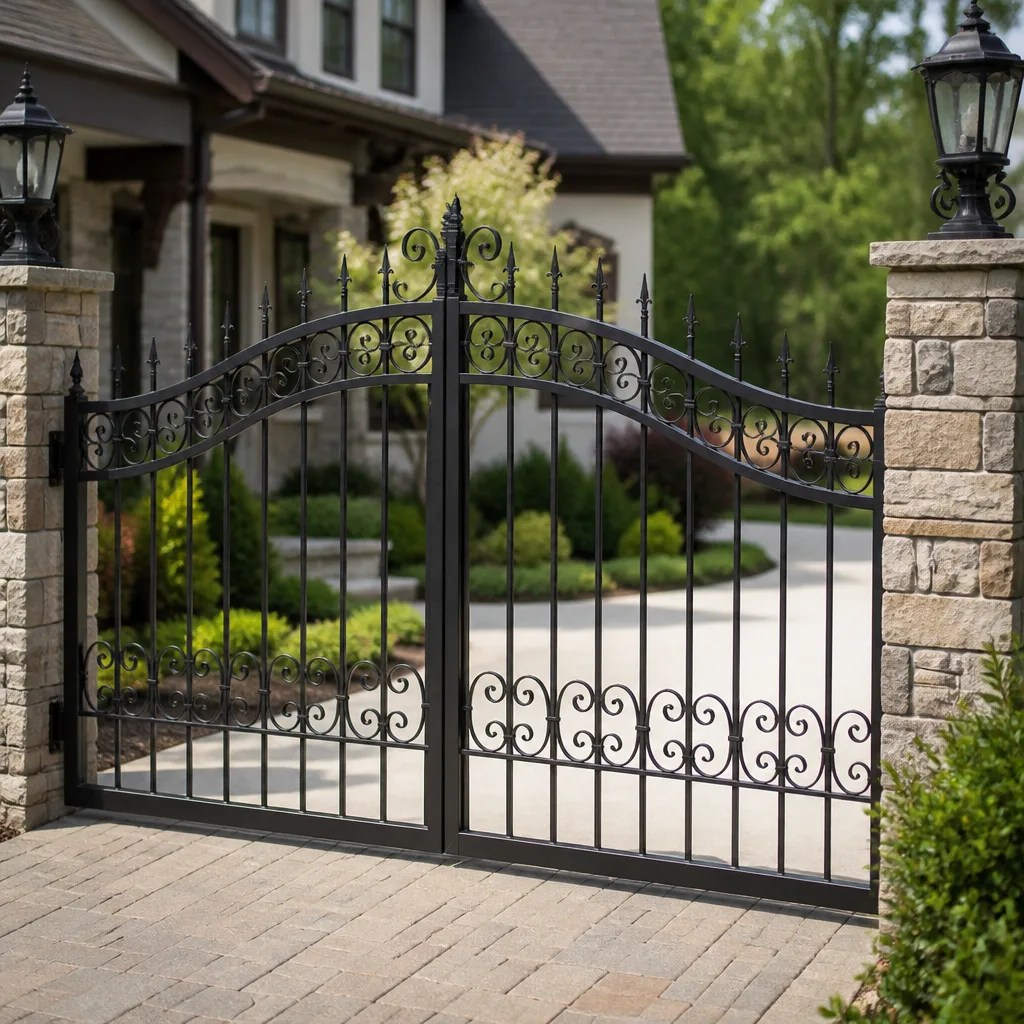 Wrought iron
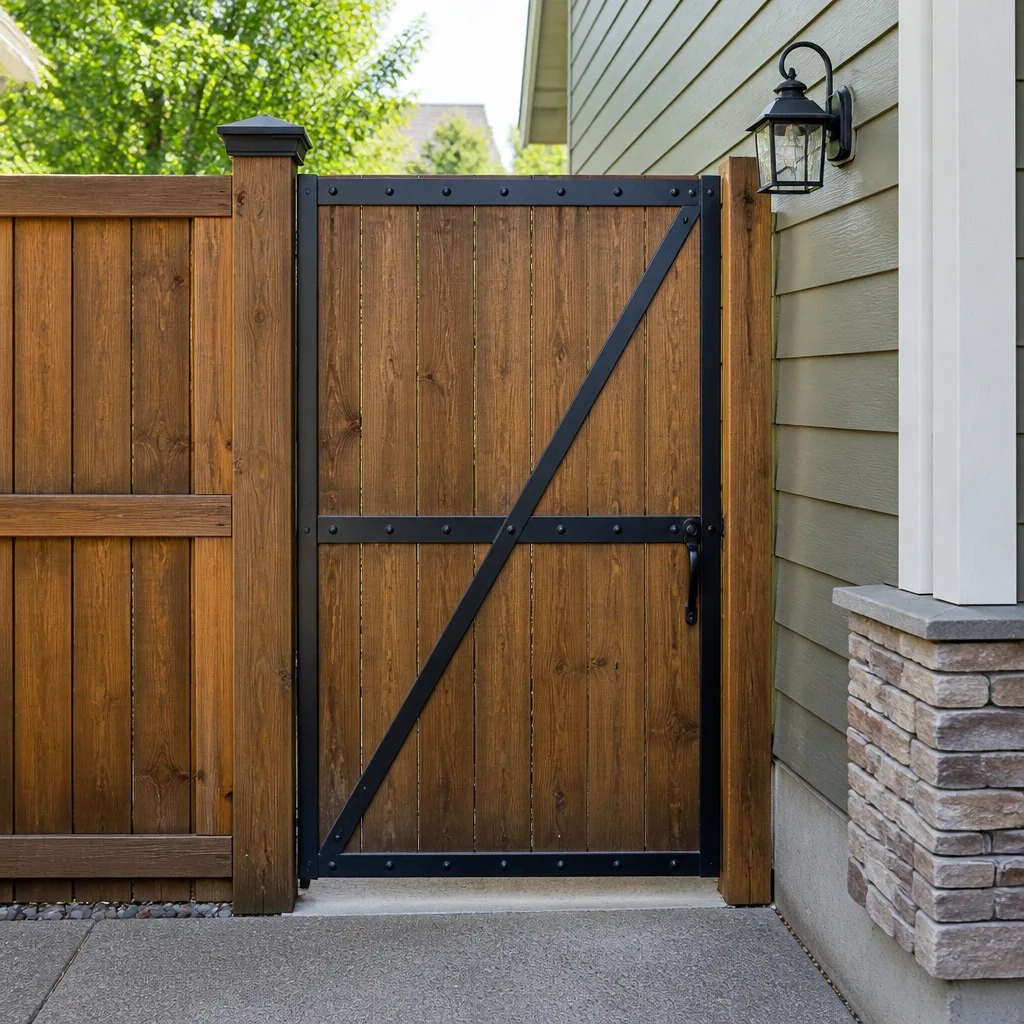 Wood & steel frame
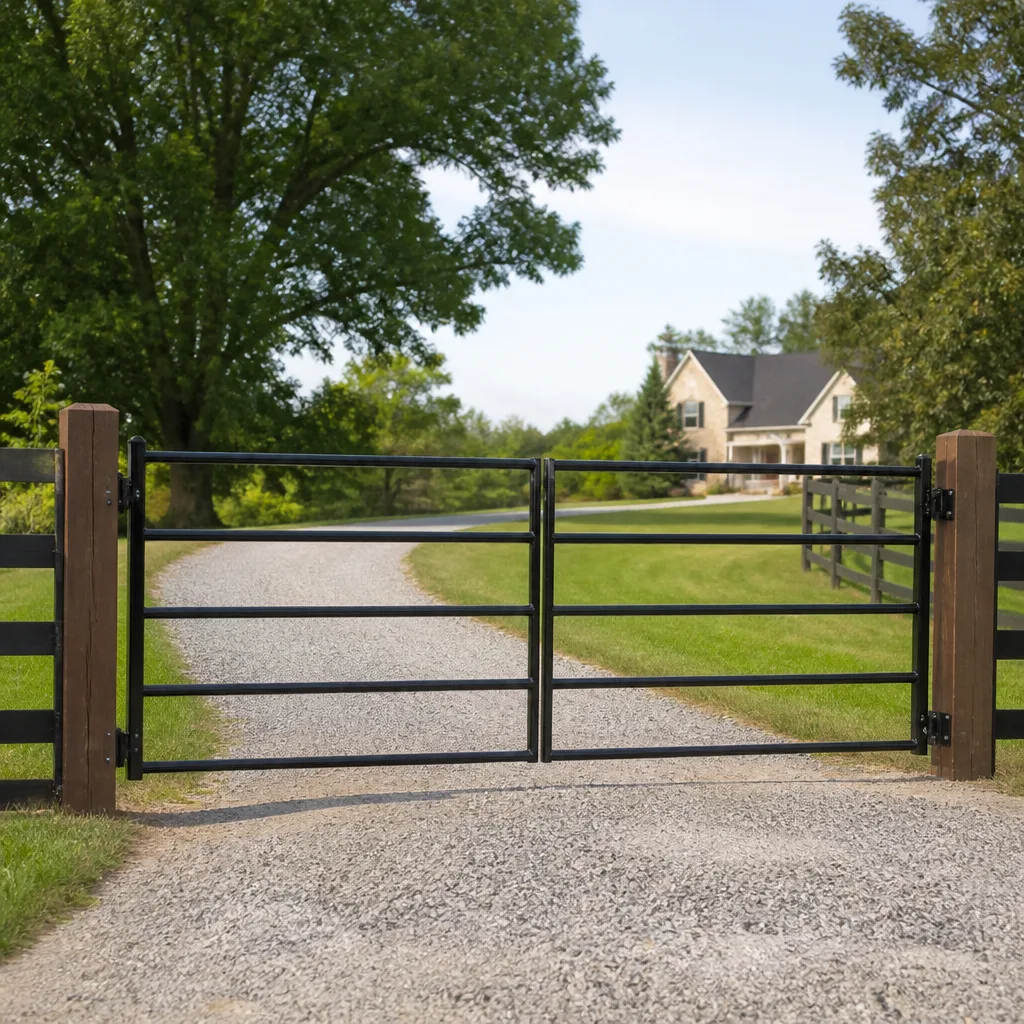 Farm & ranch
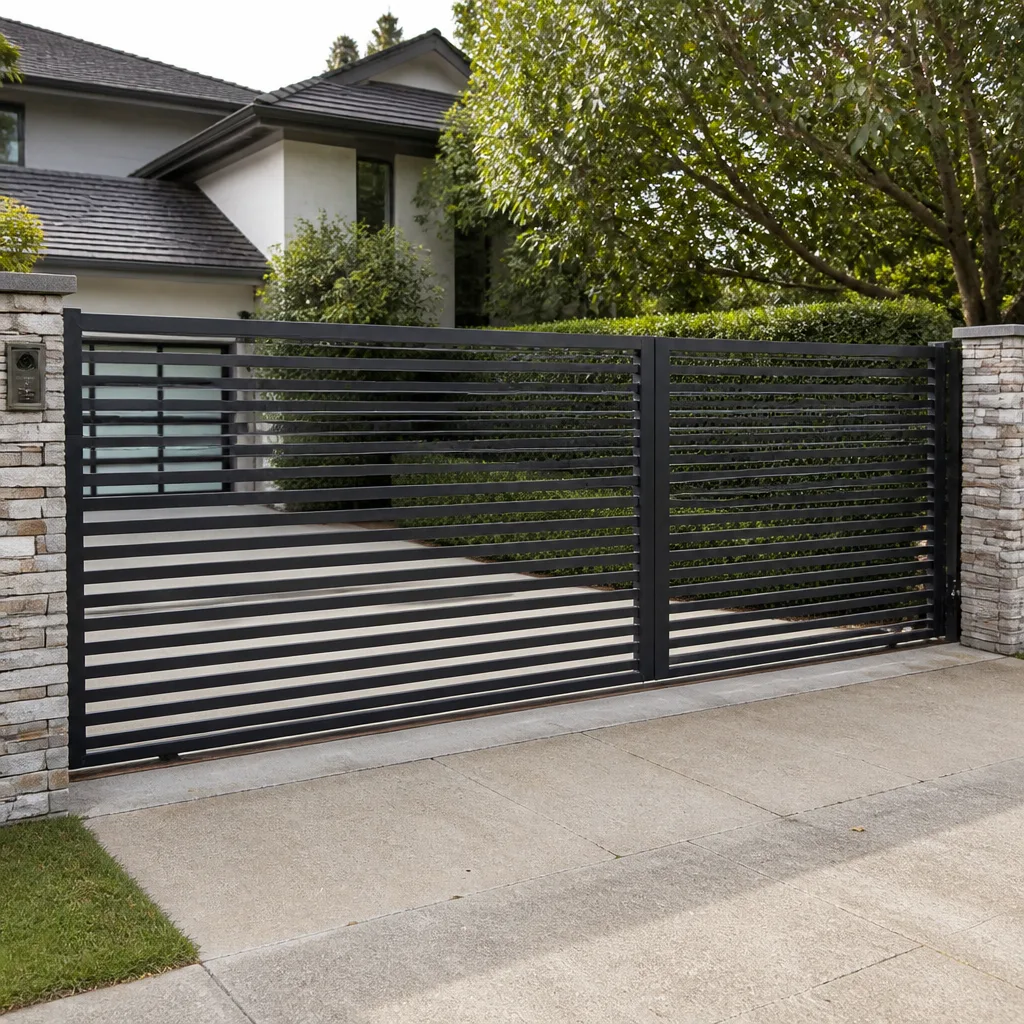 Sliding driveway gates
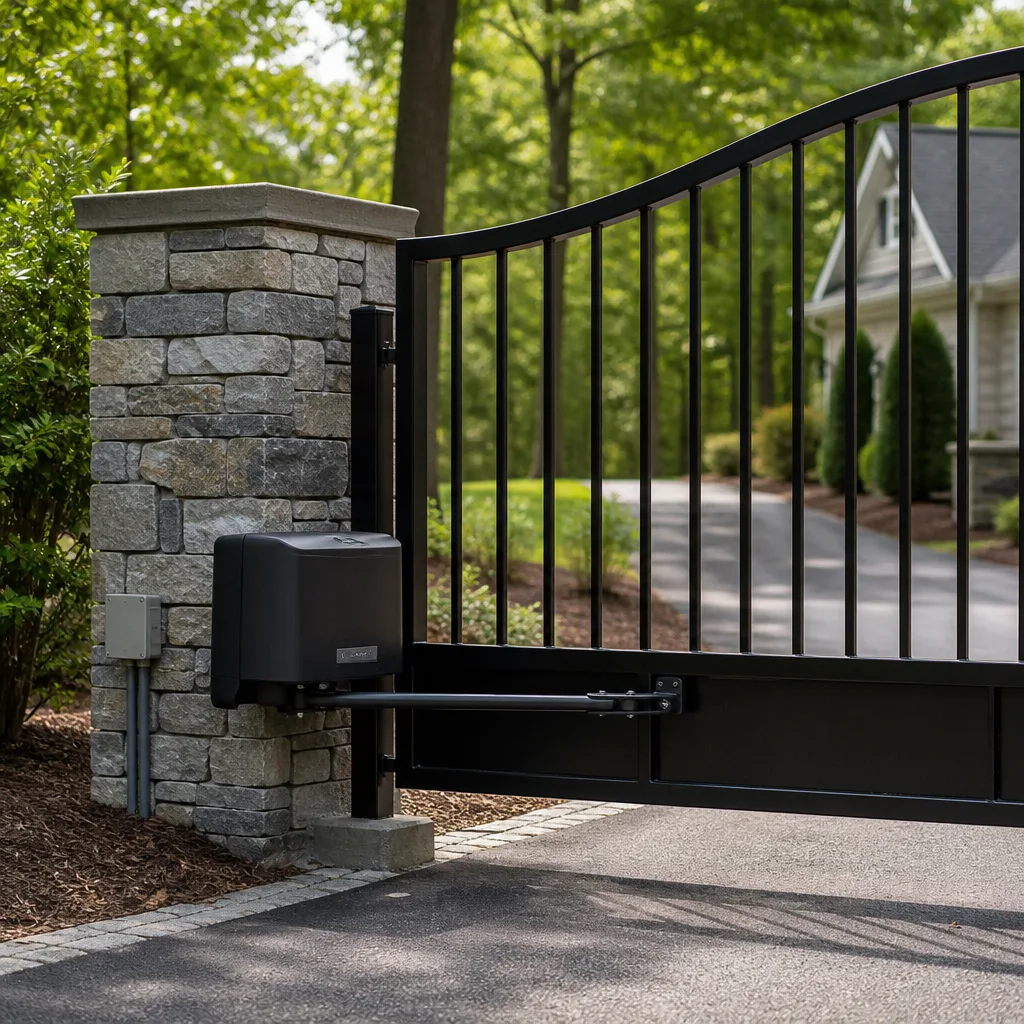 LiftMaster operators
Free on-site gate assessment - hinges, posts, and your LiftMaster or Nice gate operator checked before anything is quoted
The assessment is free and the quote is the invoice.
Get your free estimateGate Repair Warning Signs: A Folsom Homeowner’s Reference Guide
A gate that reverses direction mid-open isn’t malfunctioning randomly. It’s telling you the obstruction sensor force threshold is miscalibrated, a problem that becomes a pinch entrapment risk before it becomes a gate that won’t open. Most Folsom homeowners only react when the gate stops moving entirely, but by then a $200 repair has often become a $2,000 operator replacement. This guide teaches you to read the mechanical and electrical signals your gate sends weeks before a complete failure, so you can schedule a repair on your terms instead of waiting for the day the gate refuses to budge.
Quick Answer
The earliest warning signs of an impending gate failure in Folsom are audible: grinding indicates a failing gear or bearing in the operator, clicking points to a relay or control board issue, and straining means the gate’s weight is fighting a misaligned track or failing wheel. Visual signs like paint bubbling at hinge welds, uneven wheel wear patterns, and photo-eye housing cracks from UV exposure are equally telling. A gate that works in the morning but fails in the afternoon summer heat in Folsom is usually experiencing a thermal cutout in the operator motor, not a remote problem.
Styles & brands we work with
- Wrought iron
- Wood & steel frame
- Farm & ranch
- Sliding driveway gates
- LiftMaster operators
Table of Contents
- The Seven Sounds Your Gate Makes and What Each One Means
- Visual Signs Most Homeowners Miss
- Electrical Warning Signs: The Heat Factor in Folsom
- How to Measure if Your Gate Is Slowing Down
- Immediate Safety Hazard vs. Schedule-the-Repair
- Brand-Specific Failure Patterns We See
- What You Can Check Yourself (and What You Shouldn’t)
- Common Mistakes to Avoid
The Seven Sounds Your Gate Makes and What Each One Means
Sound is the most reliable early-warning system a gate has. Electric gates don’t have check-engine lights; they have audible signatures. We’ve spent years listening to gates across Folsom, and the same sounds repeat across every brand we service. Here’s what each one points to.
1. Grinding or Metal-on-Metal Scraping
A grinding sound during gate travel almost always means a failing gear inside the operator or a bearing that has lost its lubrication and is now running dry. On slide gates, the same sound comes from the drive chain dragging across a worn sprocket. On swing gates, grinding at the hinge side means the hinge bearing itself is deteriorating. The fix at the grinding stage is usually a gear replacement or bearing repack. Let it go, and the operator’s internal components wear to the point where the whole unit needs replacing.
2. Clicking That Repeats Without Movement
A gate that clicks repeatedly but doesn’t move is pointing at a control board relay or a capacitor that has failed. The click is the relay engaging; the silence that follows is the motor not receiving power. On Mighty Mule and Ghost Controls systems, this often traces to a capacitor that has dried out. On LiftMaster and FAAC units, it’s more commonly a relay on the control board. In either case, the component is inexpensive compared to the labor of diagnosing it correctly, which is where brand-specific experience matters.
3. A Straining or Labored Hum
When a gate sounds like it’s working harder than it used to, the motor is fighting resistance. That resistance comes from a misaligned track, a wheel that’s seized, or a gate that has settled out of level. Folsom soil shifts with the seasons, and a gate that was perfectly aligned at installation can be a quarter-inch off three years later. That quarter-inch multiplies the load on the motor every single cycle.
4. A Sharp Squeal on Startup
A brief squeal when the gate begins moving is usually belt slippage in the operator. Belt-driven operators like many BFT and Linear models use a tensioned belt that transfers motor rotation to the drive mechanism. When that belt stretches or glazes, it slips on startup before gripping. The squeal is the slip. The repair is a belt replacement and re-tensioning, a quick job that prevents the belt from eventually snapping mid-cycle.
5. Rhythmic Thumping During Travel
A thump-thump-thump that pulses with gate movement points to a flat spot on a wheel or a damaged section of track. Slide gates roll on wheels that develop flat spots when they seize and drag instead of rotate. The thump is the flat spot hitting the ground or track with every revolution. Swing gates can produce the same rhythm from a bent hinge pin.
6. A Single Loud Pop or Crack When the Gate Reaches Its Stop
A pop at the end of travel indicates the gate is hitting its mechanical stop harder than it should. The limit switch or limit sensor is misadjusted or failing, so the operator doesn’t know the gate has reached the end of its travel and keeps applying force until the physical stop absorbs it. Over time, that impact bends the gate frame and loosens every bolt on the structure.
7. No Sound at All
Silence is the worst sound a gate makes. No click, no hum, no movement means the failure has already happened. The most common cause is a tripped breaker or GFCI, followed by a control board that has died completely and a transformer that has burned out. This is the failure that sends Folsom homeowners scrambling for a repair at the worst possible moment, because the earlier sounds were ignored.
Visual Signs Most Homeowners Miss
Gate problems leave visible evidence long before they affect function. It takes a trained eye to read them, but once you know what to look for, the signs are everywhere. Here are the four visual warnings we look for first on every service call in Folsom.
Paint Bubbling at Hinge Welds
When rust begins propagating inside a hinge weld, it lifts the paint from the inside out. What looks like a small cosmetic blister is actually the exterior marker of rust eating into the weld. If the bubbling appears on the weld itself or within two inches of it, the hinge is compromised. On a swing gate, a failed hinge weld means the entire gate panel can drop, which is a structural failure that damages the gate, the post, and potentially anything in the gate’s path. Folsom’s dry climate slows rust compared to coastal areas, but it doesn’t stop it entirely, and irrigation overspray onto gate hardware is a common local accelerator.
Wheel Flange Wear Patterns on Slide Gates
Slide gate wheels have a flange, a raised lip on one side that keeps the wheel tracking on the rail. When the flange shows a polished, worn surface, or when the wheel itself has a groove cut into it, the gate has been running out of alignment. The wear pattern tells you which way the gate has been drifting. A wheel worn on the inside flange means the gate is pulling toward the property. A wheel worn on the outside flange means the gate is pulling away. Both are signs that the track has shifted or settled and the gate is no longer running true.
Photo-Eye Housing Cracks
Photo-eyes are the safety sensors that stop a gate from closing on a car, person, or pet. Their housings are plastic, and years of direct Folsom sun UV-degrade that plastic until it becomes brittle and cracks. A cracked housing lets moisture and dust into the sensor, which eventually causes false triggers or complete sensor failure. The gate may refuse to close, or worse, lose its obstruction detection entirely. Replacing a cracked photo-eye is a fraction of the cost of the liability and repair that follows a gate closing on a vehicle because the sensor was compromised.
Gap Changes Between Gate and Post
Measure the gap between the gate edge and the post when the gate is closed. If it’s noticeably larger at the bottom than the top, or vice versa, the post or the gate frame has moved. On swing gates, this indicates settling or hinge wear. On slide gates, it indicates a guide-roller problem or track shift. The gate is still working, but the alignment issue is applying uneven stress to every component in the system with every cycle.
Electrical Warning Signs: The Heat Factor in Folsom
Folsom summers routinely push past 100 degrees, and heat is the single most common trigger for electrical gate failures that we see. The pattern is so consistent that when a homeowner tells us their gate “works fine in the morning but won’t open in the afternoon,” we already know what we’re going to find. Here’s why it happens, and what to do about it.
The Thermal Cutout Explained
Every electric gate operator has a thermal overload protection built into the motor. When the motor temperature exceeds a safe threshold, the thermal cutout trips and the motor shuts down completely. It’s a safety mechanism, not a defect. In the morning, the Folsom air is cool, the motor is cool, and the gate runs normally. By mid-afternoon, the operator housing has been baking in direct sun for hours, ambient air temperature is at its peak, and the motor’s internal temperature climbs high enough to trip the cutout. The gate works again after the motor cools, which is why the problem seems to disappear by evening.
Why This Isn’t a Remote Problem
When a gate works in the morning and doesn’t in the afternoon, homeowners almost always assume the remote is the problem. They change batteries, re-pair the remote, buy a new one, and the problem persists. The remote was never the issue. The fix for a recurring thermal cutout is usually improved ventilation in the operator housing, relocation of the operator out of direct sun where the installation allows, or replacement of a motor that has degraded to the point where it runs hotter than it should. Our electric gate repair service addresses thermal cutout issues regularly, and the fix is almost always in the operator, not the remote.
Other Electrical Warning Signs
Beyond heat-related failures, watch for these electrical symptoms:
- Intermittent operation that correlates with nothing obvious: a loose connection or compromised wiring splice somewhere between the control board and the actuator.
- Gate that trips its own breaker repeatedly: the motor is drawing more current than the circuit can supply, usually because the gate is binding or the motor windings are failing.
- Gate that opens but won’t close, or closes but won’t open: a failed limit switch or a control board that’s lost one of its relay channels.
- Remote range that shrinks over time: the antenna connection or the receiver board is degrading, common on older LiftMaster and FAAC systems.
How to Measure if Your Gate Is Slowing Down
Gate operators don’t suddenly run slower one day. They lose speed gradually, usually over six to eighteen months, and the change is imperceptible to someone who watches the gate every day. We’re all pattern-blind to gradual changes. Here’s a simple method any Folsom homeowner can use to measure gate performance objectively.
- Time the gate now. Open the gate the way you normally do and time the full travel with a phone stopwatch. Do it three times and record the average.
- Note the baseline. Compare today’s time to what the gate did when it was new. Most manufacturers list the standard travel time in the installation manual. If you don’t have the manual, a typical residential swing gate takes 12 to 18 seconds to fully open. Most slide gates take 15 to 25 seconds.
- Time it again in three months. If the gate has slowed by more than 10% in three months, something is wrong. The motor is working harder than it should, which means the underlying problem is accelerating.
- Listen while you’re timing. A gate that has slowed is usually also making more noise. The two symptoms combined tell you the problem is mechanical load, not electrical.
- Check the up-time performance. Time the gate first thing in the morning and again at 3 p.m. on a hot Folsom afternoon. If the afternoon time is noticeably slower, the motor is running hot and approaching a thermal cutout condition.
Slowing is the single most consistent signal that a gate needs attention before it fails completely. A gate that takes 20% longer to travel than it did a year ago has a mechanical problem that will only get more expensive to fix.
Immediate Safety Hazard vs. Schedule-the-Repair
Not every warning sign demands panic. Some can wait for a scheduled repair visit. Others are active safety hazards that should be addressed the same day. The distinction matters, because treating a safety hazard as a scheduling inconvenience puts people and property at risk, while treating a minor issue as an emergency wastes money. Here’s how we categorize what we see on service calls across Folsom.
Immediate Safety Hazards: Call Now
- Gate reverses direction mid-open or mid-close: the obstruction sensor is miscalibrated or failing, and the gate no longer knows when to stop. This is an entrapment risk.
- Gate continues running after reaching its stop: the limit switch has failed, and the operator is trying to push through the stop. The force can bend the gate or pull the operator off its mounting.
- Photo-eye cracked, dirty, or misaligned: the safety system is compromised, and the gate may not detect an obstruction when it closes.
- Sparks, burning smell, or smoke from the operator or control box: an electrical fault is active, and the system should be powered down and addressed immediately.
- Gate panel visibly drooping or hinge welds cracked through: a structural failure is imminent, and the gate’s weight is about to be supported by nothing.
Any of these conditions makes the gate unsafe to operate and to be around. Shut the system off at the breaker and call for same-day repair.
Schedule-the-Repair Situations
- Gate slowing down over months: the problem is real, but it’s not an immediate hazard. Schedule a visit on your timeline.
- Intermittent remote range issues: usually a receiver or antenna issue. Annoying, but not unsafe.
- Occasional grinding sound that comes and goes: a bearing or gear that’s in early failure. Repair it soon, but the gate will usually continue working for a while first.
- Paint bubbling at welds: the rust is happening, but it’s a slow process. Get it addressed within a few weeks, not a few hours.
- One photo-eye housing starting to crack: replace it before it fails completely, but the safety system is still functional as long as the sensor inside is intact.
Brand-Specific Failure Patterns We See
Every gate brand has its own engineering personality. The failure modes on a Mighty Mule are not the failure modes on a FAAC or a BFT. Working on nine named brands has given Gate Repair Folsom a read on the patterns that repeat within each brand. Here’s what we’ve observed on the four most common brands in the Folsom market.
Mighty Mule
Mighty Mule dominates the entry-level residential market, and the typical failure we see is the control board. The motors are generally sturdy, but the boards are sensitive to power surges and lightning strikes, which makes them a common replacement item. The second most common Mighty Mule issue is the limit switch assembly, which on many models is a mechanical switch that wears out over years of cycling. The good news is that Mighty Mule parts are manageable, and most repairs are straightforward for a technician who knows the brand.
LiftMaster
LiftMaster’s residential and light-commercial gate operators are known for their belt and gear assemblies. The most common LiftMaster failure we see is the drive gear stripping, especially on units that have been running a heavy gate for several years. The second pattern is capacitor failure, which presents as the click-without-movement sound described earlier. Both are repairable without replacing the entire operator.
FAAC
FAAC is a professional-grade brand that shows up on commercial and high-end residential gates throughout Folsom. These are oil-bath hydraulic operators on many models, and unlike the other brands on this list, the oil level and oil condition are the first thing to check. Low oil creates the straining sound and slows the gate down. Contaminated oil destroys the internal hydraulic components. FAAC systems are also more sensitive to control board voltage issues than most, so a proper diagnosis requires checking both the mechanical and electrical sides of the system.
BFT
BFT operators are popular on commercial slide gates, and their known weakness over time is the capacitor, followed by the main drive chain tension. A BFT chain that stretches beyond specification causes the rhythmic thump and puts uneven load on the motor. The brand is durable overall, but it demands more routine tension and alignment checks than some competitors.
This brand familiarity matters for Folsom homeowners because the repair path is different for each system. A technician who knows FAAC hydraulic characteristics and Mighty Mule board sensitivity arrives with a diagnosis in mind. Someone who doesn’t know the brand arrives with a multimeter and a manual.
What You Can Check Yourself (and What You Shouldn’t)
Some gate warning signs are safe to investigate on your own. Others are not. The line between the two matters more than most homeowners realize. Here’s a practical split for Folsom homeowners who want to understand their gate before calling for repair.
Safe to Check Yourself
- Visual inspection of the gate and track. Look for the visual signs described earlier: paint bubbling, wheel wear, photo-eye cracks, gap changes. None of these require touching anything energized or load-bearing.
- Photo-eye alignment. Most photo-eyes have a small LED indicator. When they’re aligned and clean, the LED is steady. When they’re misaligned or dirty, the LED blinks or goes out. Cleaning the lens and adjusting the sensor is a simple task any homeowner can handle.
- Breaker check. If the gate is completely dead, check the breaker before calling anyone. A tripped GFCI is the single most common cause of a dead gate, and the fix takes ten seconds.
- Physical obstruction check. Walk the track or the swing path and look for anything that could be binding the gate: a rock in the track, a branch against the gate edge, a fallen fence board.
- Remote battery replacement. A dead remote battery is the easiest fix in the industry, and it’s worth ruling out before calling for service.
Do Not Attempt Yourself
- Opening the operator housing. The operator contains capacitors that hold voltage even after the power is disconnected. A wrong touch across the capacitor terminals is a serious shock risk.
- Adjusting limit switches. The limit switch controls where the gate stops. Adjusting it wrong means the gate doesn’t stop where it should, which turns a simple repair into a safety incident.
- Working on the control board. Control boards are expensive and sensitive. One wrong connection burns a $400 board.
- Adjusting or replacing gate springs or counterweights. Swing gates carry stored tension. Releasing it improperly turns a gate panel into a projectile.
- Any repair on a gate that’s off its track or visibly sagging. The gate’s weight is no longer properly supported, and anything you do to it can shift that weight onto you.
- Replacing the remote when the gate is slow to respond. The remote was never the problem. If the gate responds but responds slowly, the issue is in the operator or the track. We see this mistake constantly in Folsom.
- Ignoring the first appearance of a new sound. New sounds don’t go away on their own. The grinding gear that was diagnosed early costs $150. The same gear ignored for six months takes the operator with it and costs $1,500.
- Lubricating a squeaky gate with the wrong product. Spray lubricants work temporarily and wash out quickly. The wrong lubricant on a drive chain attracts dust and accelerates wear. Use the lubricant the manufacturer specifies for that component.
- Waiting until the gate won’t move at all before calling. By the time a gate is completely dead, the repair bill has usually doubled compared to what it would have been when the first warning sign appeared.
- Calling a general handyman for an electric gate problem. A handyman can fix a hinge. They can’t diagnose a control board, a photo-eye circuit, or a hydraulic operator. Electric gates are a specialized trade, and the wrong diagnostic attempt often costs more than calling the right person the first time.
- Leaving the gate on manual mode as a “temporary” fix that lasts for months. Manual mode means the gate is no longer powered, and the safety systems are not active. A gate in manual mode that’s left open is a security gap. A gate in manual mode that’s left closed is a pinch hazard.
- Assuming a hot-weather failure is a fluke. If your gate fails on a hot afternoon in Folsom, it will fail again on the next hot afternoon. Thermal cutouts don’t heal.
The rule of thumb: if it’s visual, it’s safe to look at. If it involves tools, tension, or electricity, call someone who does this every day. A Folsom homeowner should never be the one opening an operator housing at 9 p.m. with a flashlight.
Common Mistakes to Avoid
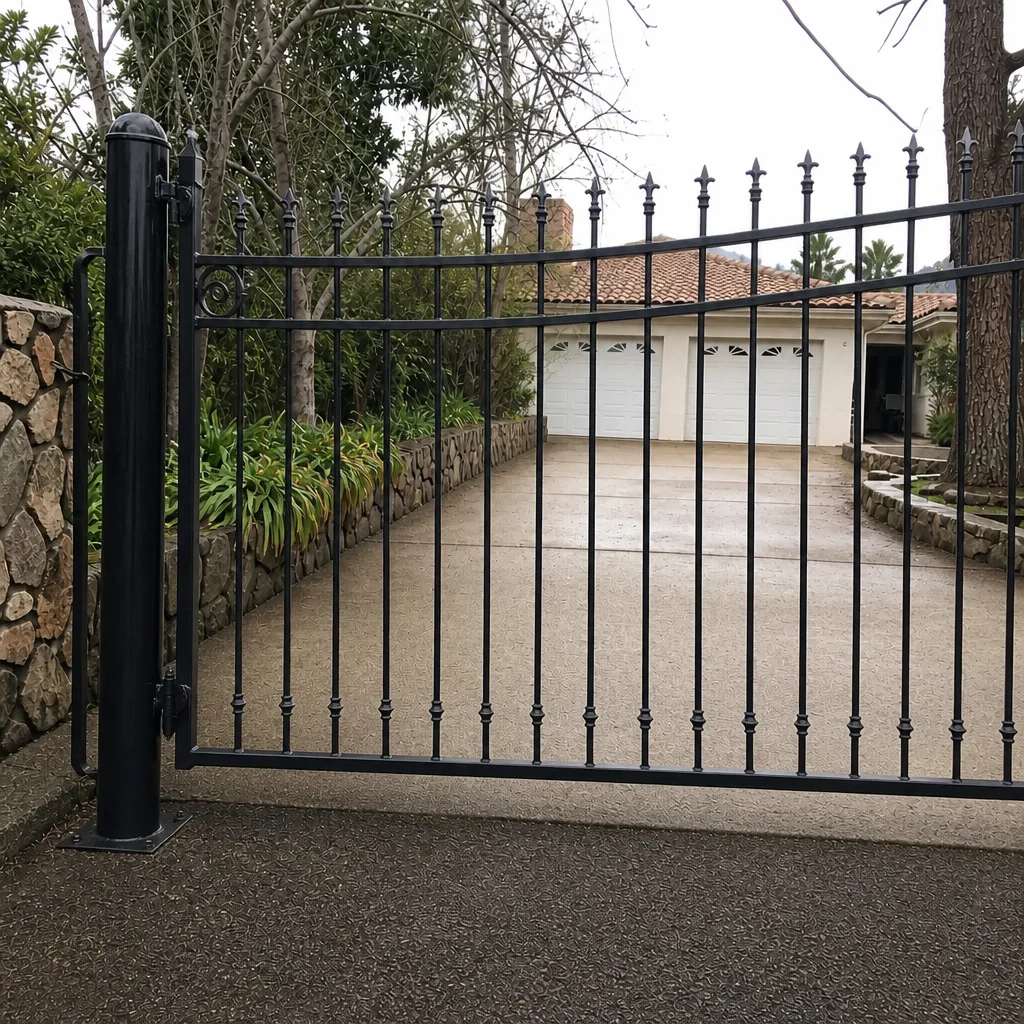
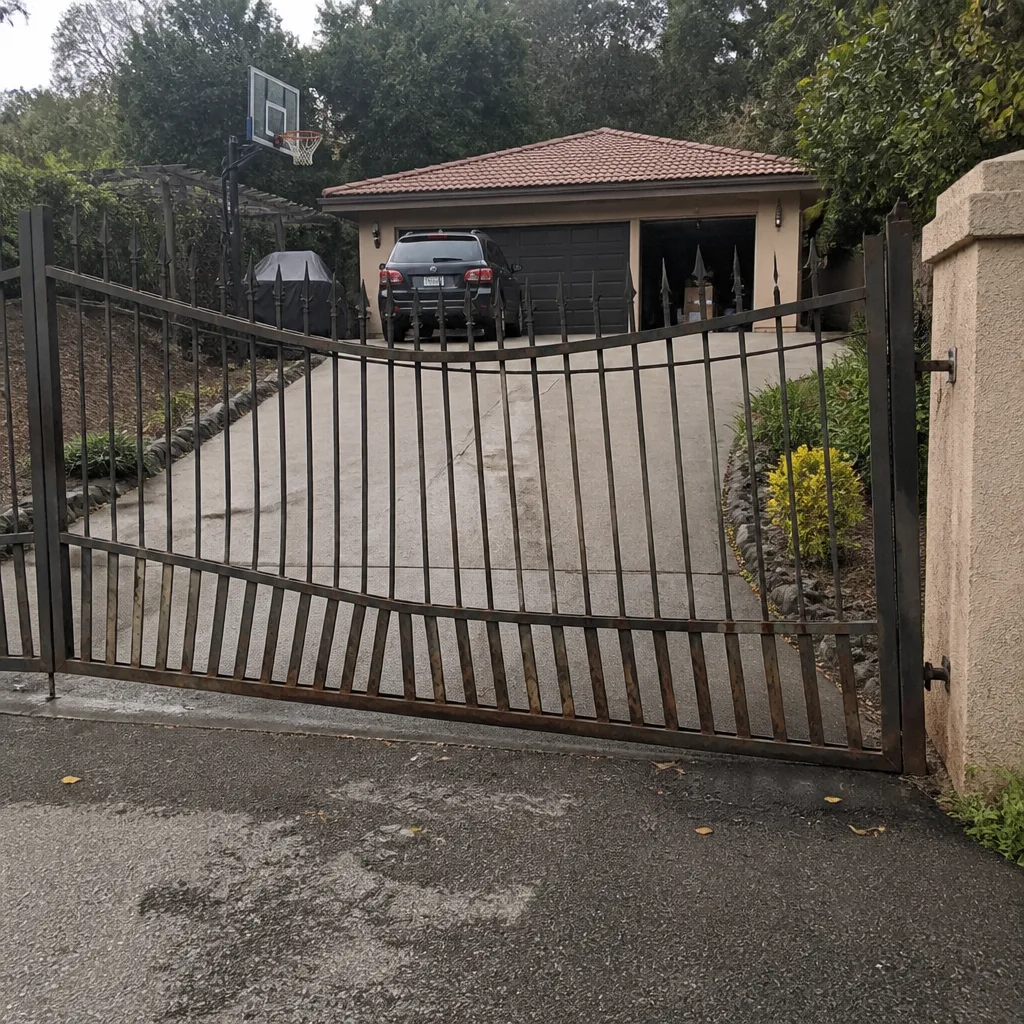
See the difference
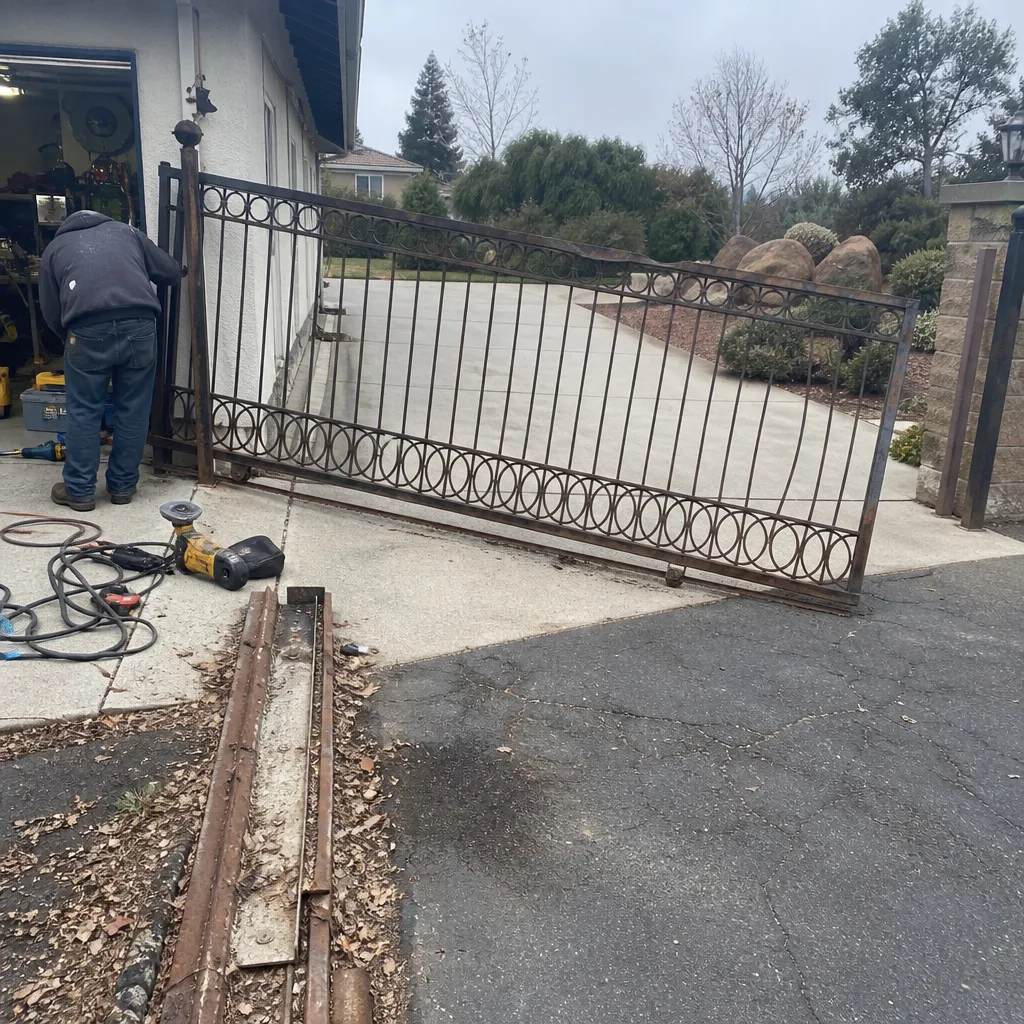 Before
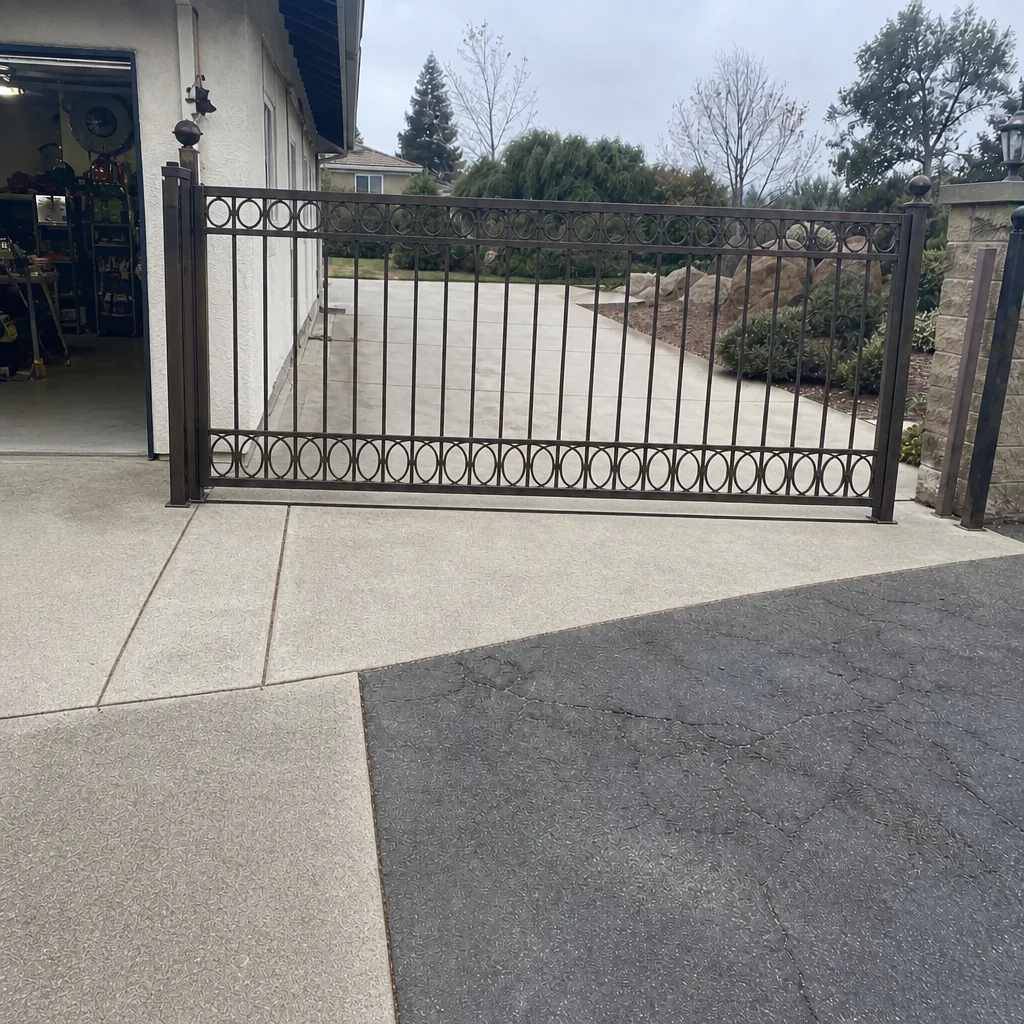 After
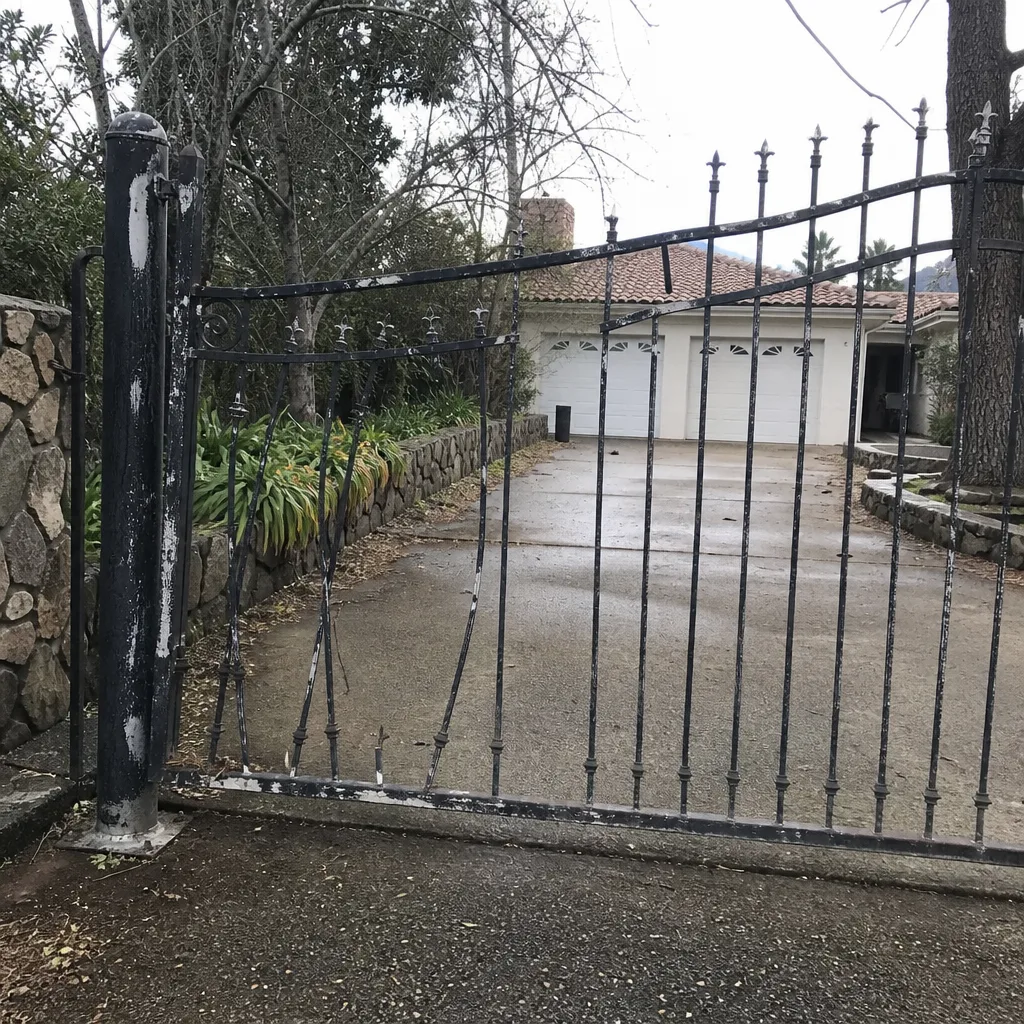 Before
 After
 Before
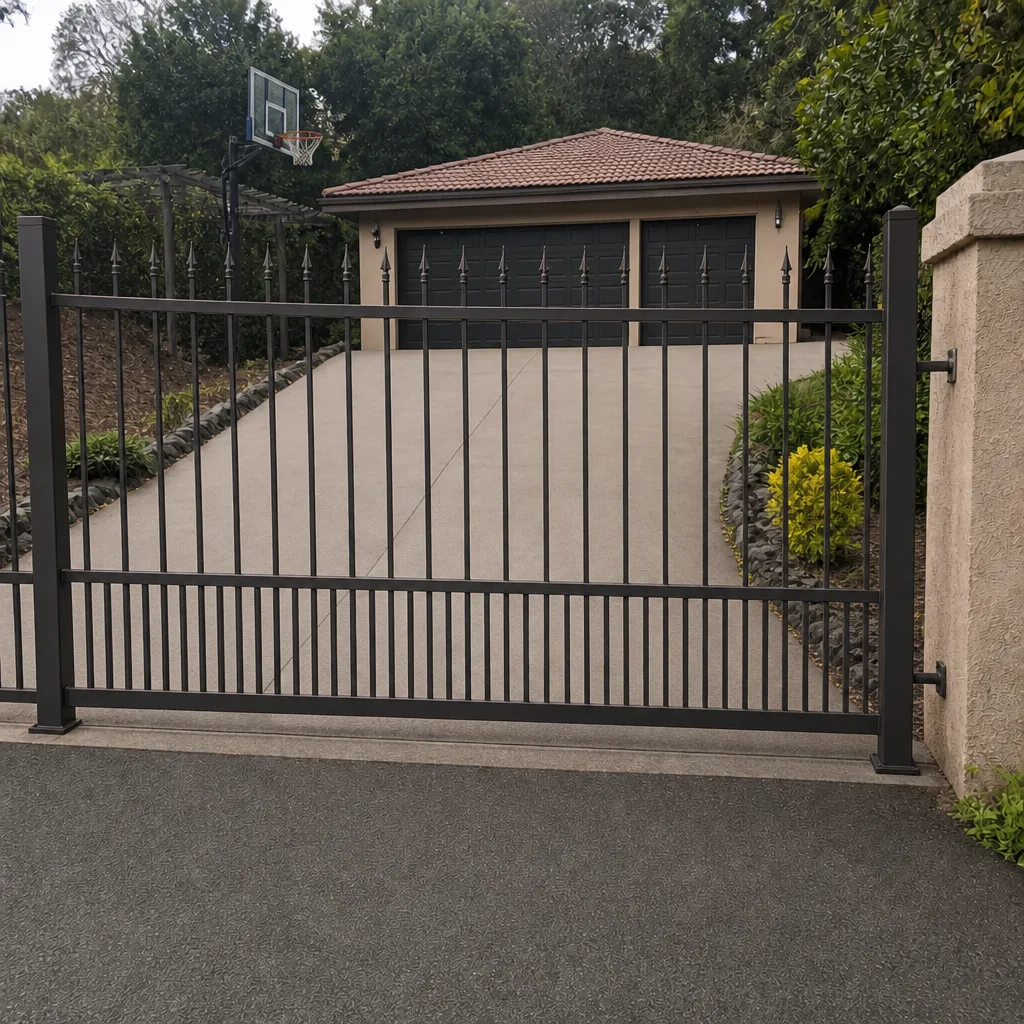 After
When to Call a Professional
Call a professional the moment you notice any of the safety-hazard warning signs listed above, and call soon for any of the early mechanical or electrical warnings. The cost pattern in gate repair is consistent: early intervention costs a few hundred dollars, and late intervention costs a few thousand. The frustrating part of this trade is that most late interventions started as early warnings. Gate repair in the Folsom area is a call you should make while the gate is still working, not after it has already failed. Gate Repair Folsom offers free estimates in Folsom. Call (833) 593-3926. We answer 24/7. Fast dispatch from 7am to 7pm, Sunday through Friday.
Frequently Asked Questions
The operator is the most common failure point on an electric gate, and the earliest indicator is a change in how the gate sounds and how long it takes to travel. Grinding, clicking without movement, a labored hum, or a gate that has slowed by more than 10% all point to an operator problem. Heat-related failures that happen only on hot Folsom afternoons are also operator-level issues, not remote issues.
The afternoon failure pattern is almost always a thermal cutout in the operator motor. The Folsom summer heat pushes the motor’s internal temperature past the safety threshold, the thermal overload trips, and the motor shuts down until it cools. The fix is usually improved ventilation, operator relocation, or motor replacement if the motor has degraded to the point of running hot.
Most slowing gates can be repaired. The slowing is typically caused by increased mechanical resistance from misalignment, wheel wear, or chain stretch, all of which are repairable. The operator motor usually has life left once the resistance is removed. Replacement becomes necessary when the operator’s internal components have been damaged by months or years of running against that resistance.
Gate repair pricing in Folsom varies by the component and the brand. A capacitor replacement, belt replacement, or photo-eye replacement typically lands in the $150 to $400 range depending on the system. A control board replacement typically runs $400 to $900 depending on the brand. A full operator replacement is higher. The estimate is free, and the written estimate sets the final price before any work starts. Call (833) 593-3926 for an exact quote.
We work on nine named gate and operator brands spanning residential and commercial grades, including Mighty Mule, Ghost Controls, LiftMaster, FAAC, BFT, Linear, Viking, DoorKing, and Elite. The brand familiarity means we arrive knowing the system’s typical failure modes and the correct repair path, not guessing from a manual.
Yes. A gate that reverses mid-cycle has a miscalibrated or failing obstruction sensor, and the reversal is the gate’s safety system triggering incorrectly. The danger is that the same sensor problem can cause the gate to fail to reverse when it actually encounters an obstruction, which is an entrapment hazard. This is a same-day repair priority.
The Bottom Line
Your gate announces its failures before they happen. The grinding gear, the slow travel, the afternoon thermal cutout, the paint bubbling at the hinge weld, these are all messages sent weeks or months before the gate stops moving completely. Reading them correctly and acting early is the difference between a component replacement and a full system replacement. Folsom’s hot summers and shifting soils create specific failure patterns that homeowners here should understand, and the gate brands common in this market each have their own predictable weaknesses. Pay attention to the sounds. Watch the track and the wheels. Don’t ignore the afternoon failures. And when the symptoms appear, call someone whose entire trade is gates, not someone who does gates on the side.
Written by the team at Gate Repair Folsom, serving Folsom since 2014.