
Last updated November 4, 2026
 Wrought iron
 Wood & steel frame
 Farm & ranch
 Sliding driveway gates
 LiftMaster operators
Free on-site gate assessment - hinges, posts, and your LiftMaster or Nice gate operator checked before anything is quoted
The assessment is free and the quote is the invoice.
Get your free estimateGate Repair Maintenance Schedule: What to Do and When
Most gate failures in Folsom don’t start with a dramatic snap or a burned-out motor. They start quietly, months earlier, as a dry hinge, a dusty photocell, or a control board slowly cooking in a metal cabinet that hits 130 degrees every July afternoon. The chain or belt on a residential swing operator should be lubricated every 90 days in Sacramento Valley conditions, not once a year. Most manufacturers say the same in their manuals. Almost no homeowner has ever read it.
This guide separates gate maintenance into the actual intervals that matter: monthly visual checks, 90-day mechanical service, and annual electrical inspection. Each layer protects different components wearing at different rates. Skip one layer and the others fail sooner. By the end, you’ll have a real schedule you can put on your wall, not a generic “tune it up in spring” reminder that leaves the most failure-prone parts untouched.
We’re Gate Repair Folsom, and we work on gates every day. What follows reflects what we see when maintenance gets done right, and what we find when it doesn’t.
Quick Answer
A proper gate maintenance schedule has three tiers: monthly visual and listening checks, 90-day mechanical service (lubrication, hardware tightening, roller and hinge inspection), and an annual electrical inspection of the control board, limit switches, loop detectors, and safety photocells. In Folsom’s heat and dust cycle, the 90-day interval matters more than the annual one: dry bearings and grit-covered sensors fail faster here than in mild coastal climates. Homeowners can handle the monthly checks. The 90-day and annual work should involve a gate technician familiar with your specific operator brand.
Styles & brands we work with
- Wrought iron
- Wood & steel frame
- Farm & ranch
- Sliding driveway gates
- LiftMaster operators
Table of Contents
- Monthly Visual Checks: The Five-Minute Walkaround
- 90-Day Mechanical Service: The Interval Most People Skip
- Annual Electrical and Control-Board Inspection
- How Carmichael’s Heat and Dust Change Your Maintenance Schedule
- Brand-Specific Lubrication: Why One Size Doesn’t Fit
- Five Early-Warning Signs You Already Missed a Maintenance Window
- Which Maintenance You Can Do Yourself, and Which Voids Warranties
- A Simple Seasonal Calendar for Folsom Gate Owners
Monthly Visual Checks: The Five-Minute Walkaround
This is the layer you can do yourself, and it catches problems before they become breakdowns. You’re not fixing anything. You’re training your eye to notice when something changed. Most gate failures telegraph themselves weeks in advance through small visual cues that get ignored because nobody walks the gate line on purpose.
Here’s the walkaround, in order:
- Open the gate fully and watch the arc. A gate that wobbles mid-travel, scrapes the ground, or hesitates at a specific point is telling you something about its hinges, rollers, or track. Smooth travel is the baseline. Anything else is a message.
- Look at the hinge and roller points. Dry metal shows as rust dust, dark streaks, or squeaking when the gate moves. Listen for grinding. These are the sounds of metal on metal with no lubrication left.
- Check the photocell lenses. Dust, spider webs, and grass clippings collect on the small round safety sensors at the base of the gate path. A dirty photobeam is the most common cause of a gate that refuses to close or reverses for no apparent reason.
- Examine the chain or belt on the operator arm. Look for sag, visible dryness, or accumulated grit. In Folsom, dust works its way into chain links within weeks during summer. A dry chain stretches faster and loads the motor harder.
- Test the safety reversal. While the gate is closing, block the photobeam with your hand. The gate should stop and reverse. If it doesn’t, stop using the automatic close function until a technician checks it. This is a safety system, not a convenience.
Five minutes a month. That’s the entire walkaround. Put a recurring calendar reminder on your phone and do it the first Sunday of each month when you’re already outside checking the irrigation or pulling weeds.
The value isn’t fixing anything during the walkaround. It’s noticing the change early, before a worn hinge turns into a bent operator arm and a $900 repair instead of a $40 hinge service.
90-Day Mechanical Service: The Interval Most People Skip
Here’s the layer where Folsom gate owners lose the most service life. The 90-day mechanical service is not a deep cleaning. It’s the interval at which moving parts need lubrication and hardware check-tightening in a dry, dusty, hot climate. Annual servicing leaves dry components running for an extra nine months before anyone touches them.
The tasks that matter at 90 days:
- Lubricate hinge pins, roller bearings, and the operator chain or belt. Use the lubricant your operator manual specifies. Not a generic spray. More on that in the brand section below.
- Tighten every visible fastener. Gate vibration loosens bolts on hinge plates, operator mounting brackets, and track hardware. A loose bolt on a slide gate track is a gate-off-track incident waiting to happen.
- Clean and align photocells. Wipe the lenses with a dry cloth. Check alignment by making sure the indicator light on each sensor is steady green. If the light flickers or goes amber, the beam is interrupted by dirt, misalignment, or wiring.
- Inspect nylon rollers and guide wheels. Look for flat spots, cracks, or wobble. Nylon rollers in Folsom heat get brittle faster than manufacturer baselines assume. A flat-spotted roller grinds instead of rolls.
- Clear the track bed and hinge path. Leaves, gravel, pine needles, and the general debris of a Sacramento Valley yard collect in gate tracks and hinge sweeps. Clearing the path at 90 days prevents the slide gate from finding that one pebble and stopping halfway every morning.
- Opening the control box and looking for heat damage. Control boards in Folsom run hot all summer. Burn marks, discolored solder joints, bulging capacitors, or a burnt smell inside the cabinet are early failure signals. Catching them in an inspection beats finding them during a dead gate at 7am.
- Testing limit switches under load. Limit switches tell the operator where the gate stops. As they wear or drift, the gate over-travels, under-travels, or slams at the end of each cycle. Testing them annually catches slow drift before it bends a hinge or strips a gear.
- Checking loop detectors for proper sensitivity. If your gate opens on a vehicle loop, the sensitivity setting drifts over time. Too sensitive and the gate opens for every dog and rabbit that wanders past. Not sensitive enough and your car sits at the gate waiting.
- Verifying the battery backup still holds a charge. Many operators have a backup battery for power outages. A battery that died two years ago is a gate that won’t open during the next rolling blackout or wind event. Testing it annually tells you whether it’s still doing its job.
- Cleaning the inside of the control cabinet. Dust and bugs collect inside control boxes. Dust holds moisture and bridges electrical contacts. A clean board runs cooler and lasts longer.
- Monthly visual walkaround. No risk, high value. Do this every month.
- Cleaning photocell lenses with a dry soft cloth. Do not use water, solvent, or glass cleaner. A dry wipe removes Sierra dust without leaving a film.
- Clearing leaves, gravel, and pine needles from the gate track and hinge path. Keep the bed clear and the gate will stop finding obstacles.
- Checking that visible bolts and fasteners are still tight. A wrench check on hinge plates and operator mounts is fine. Do not over-tighten; you’re checking for movement, not crushing the hardware.
- Cleaning the outside of the control cabinet and ensuring the area around it stays clear. Keep sprinklers aimed away from the cabinet. Water intrusion is a control board killer.
- Any internal lubrication decisions. This is the highest-risk owner task. The wrong product on the wrong component, over-applied, will bind the mechanism or attract dust into a grinding paste. If your operator manual is missing or unclear, don’t guess.
- Anything involving the control board, wiring, or electrical cabinet interior. Opening the cabinet and probing around is how boards get shorted and owners get hurt. The capacitor on some operators holds charge even with power off. Electrical work on gates is dangerous and belongs with a trained professional. We’re not going to write a step-by-step for opening a live control cabinet, and neither should you.
- Limit switch adjustment. This affects where the gate stops and how hard it contacts the stops. A misadjusted limit switch turns a smooth gate into a gate that over-travels, slams, or bends its own hardware.
- Loop detector sensitivity and wiring. If the gate opens on a vehicle loop, this is buried wire and a tuned circuit. Digging at it or adjusting the trim pots without a meter risks a short or a loop that won’t detect your car.
- Any repair performed under warranty. Many manufacturer warranties require service by a qualified technician using approved parts. Self-repair with a generic part can void coverage. Check your warranty terms before opening anything.
We recommend scheduling this service every 90 days, no matter how the gate feels. The point is to replace lubrication before it’s gone, not after the metal has been running dry for weeks. In our experience at gate repair calls, the homeowners who keep a 90-day rhythm rarely see us for anything except routine work.
You can do some of this yourself if you’re attentive and use the right materials. The lubrication step is where most DIY attempts go wrong, which is why the brand section below matters more than people expect.
Annual Electrical and Control-Board Inspection
Once a year, the electrical side of your gate deserves a focused hour of attention. This is the layer most likely to surprise you, because electronics rarely give the visual warnings that mechanical parts do. A control board can look perfect and be one heat event away from failure.
A proper annual electrical inspection includes:
This inspection matters double in Folsom because our summers push control electronics to their thermal limits. A board that would last fifteen years in a mild climate can cook in a metal cabinet through a Sacramento Valley summer. The annual check gives you a chance to catch heat stress before it becomes a permanent failure.
For owners of electric gate systems from brands like DoorKing, Elite, or LiftMaster, this annual inspection is also when firmware settings and loop timing get verified against real usage. A gate that cycles forty times a day needs different limit settings than one that cycles ten times.
How Carmichael’s Heat and Dust Change Your Maintenance Schedule
Most manufacturer maintenance schedules are written for average conditions. Carmichael and the surrounding Sacramento Valley are not average. Our summers produce week after week of triple-digit heat, with dry air and fine dust that works into everything. That changes what wears first and how often it needs attention.
Dust is the first accelerator. It gets into chain links, hinge pins, roller bearings, and control boards. It mixes with whatever lubrication is present and forms a grinding paste. Components that would stay quiet and smooth in a moister climate run dry and gritty here. The photocells on an electric gate repair route get coated with dust in weeks, not months. Clean lenses in July stay clear for two or three weeks before needing another wipe.
Heat is the second accelerator. Nylon rollers and plastic gears lose flexibility as temperatures climb. Rubber seals around the control cabinet dry and crack. The control board itself runs hot inside a metal enclosure that’s been baking in direct sun since morning. Every electronics component has a thermal limit, and Folsom summers push toward it daily.
The practical effect: in Carmichael, the 90-day mechanical interval is not optional. It’s the minimum that keeps pace with how fast dust and heat consume lubrication and stress moving parts. The annual electrical inspection should land in early spring, before the summer heat begins, so any heat-related damage from the previous summer is caught and addressed before it gets tested again.
This also means you should not judge your gate’s condition by how it behaves in winter. A gate that works fine in January may be one heat cycle from a failed control board by July. Carmichael’s mild winters hide problems that the summer exposes.
Brand-Specific Lubrication: Why One Size Doesn’t Fit
Using the wrong lubricant is one of the most common ways homeowners damage their own gate operator. Not all openers use the same materials in the same ways. What works on a residential swing arm may be wrong for a commercial slide system.
A LiftMaster residential swing operator typically runs a chain or belt on the arm. The chain needs a light machine oil or a dry-film lubricant that penetrates into the link pins. Spraying heavy grease on a LiftMaster chain attracts dust into sticky clumps inside the arm channel. Within weeks, that grease becomes a grinding compound in Carmichael dust. The correct product is usually a light-weight, non-attracting chain lubricant applied sparingly.
A Viking slide system uses a different design: a rack and pinion gear driving a steel track. The rack teeth and the pinion gear want a heavier-duty open-gear lubricant that stays put under high pressure. A light oil runs off in a season. But the track’s rollers and guide wheels still need their own lighter product at their bearings. Conflating these is like using motor oil on bicycle chain links and wonder why the chain is thrown.
Mighty Mule and Ghost Controls operators, common on residential swing gates in the Sacramento Valley, are lighter-duty systems built around DC motors and lead screws or lightweight chains. They need conservative lubrication. Over-lubricating a lead screw attracts enough dust to bind the screw and burn out the motor. These systems often work better with a dry lubricant or a very light film than with any kind of wet grease.
DoorKing and Elite units, found on many commercial and high-end residential properties, are heavier duty and tend to tolerate a wider range of lubrication, but the specific hinge points and bearings still want the right product for the right material. The manual for your specific model is the first place to look, and the model number is on a sticker inside the control cabinet door.
This is why we tell Folsom owners: do not guess at lubrication. Using the wrong product does more damage than using nothing, because the wrong product combines with our local dust to form something abrasive. When in doubt, have a technician who knows your brand handle the 90-day service.
Five Early-Warning Signs You Already Missed a Maintenance Window
When maintenance gets skipped, gates send signals. Here are the five most common signs we see in Carmichael, what they mean, and what happens next if you ignore them.
The gate slows down partway through its travel. A gate that used to open in twelve seconds and now takes eighteen is usually a lubrication failure or a motor straining against increasing friction. The problem compounds. The motor works harder, runs hotter, and dies sooner. Slowing travel is not normal aging; it’s a warning.
The opener hums or grinds. A hum without movement means the motor is energized but the mechanical load is stuck or too heavy. It could be a dry lead screw, a seized hinge, or a failing capacitor. Grinding metal-to-metal sound is dry bearings or rollers. Both sounds mean stop cycling the gate until someone looks at it.
The gate reverses for no reason. If your gate closes halfway and then reverses while nothing is in the way, check the photocells first. Dirty lenses, misalignment, or failing sensor wiring produce exactly this behavior. If the photobeams are clean and aligned, the issue may be in the control board logic or a failing safety edge. A gate that reverses unpredictably is a safety problem.
You hear clicking at the control box when the gate won’t move. A rapid click from the cabinet when you press the remote often points to a failing relay or a low-voltage problem on the board. It can also be a battery backup trying to engage without enough charge. The click is the board attempting to do its job and failing.
The gate slams at the end of travel. A gate that hits the close stop hard instead of slowing before contact has a limit switch problem. The switch is supposed to tell the operator to decelerate and stop gently. When it fails, the gate crashes into the stop, bending hardware and jarring the entire frame. Fix the switch before it breaks a hinge weld.
Any one of these signs means the maintenance window has passed and repair is now the right conversation. Continuing to run the gate makes every problem more expensive. Call for a diagnosis before you keep using it as if nothing changed.
Which Maintenance You Can Do Yourself, and Which Voids Warranties
Some maintenance is genuinely owner-serviceable. Some of it is not, and doing it wrong can void your operator warranty or create a repair bill that didn’t need to happen. Knowing the difference is part of being a responsible gate owner.
Owner-serviceable, with care:
Leave to a technician:
The practical line: if the task involves opening an electrical enclosure, adjusting a safety device, or applying a lubricant to a moving part where you don’t know the correct product, it’s a technician’s task. For Folsom owners, the monthly walkaround and keeping the track clean does plenty on its own. The 90-day and annual work is where calling a specialist pays off.
A Simple Seasonal Calendar for Folsom Gate Owners
Here’s the schedule in plain form. Print this and put it inside the cabinet door or on the garage wall next to the controller box.
Monthly (year-round): Five-minute walkaround. Open the gate, watch the arc, listen, check photocells, test the safety reversal. Clear debris from the track and hinge path.
Every 90 days (March, June, September, December): Mechanical service. Replace lubrication on hinge pins, rollers, and the operator chain or belt. Tighten visible hardware. Clean and align photocells. Inspect rollers and guide wheels for wear. Clear the full track bed.
Annually (early spring, February or March): Electrical inspection. Open the control cabinet, inspect the board for heat stress, test limit switches, check loop detector sensitivity, verify battery backup, clean the cabinet interior. For operators running daily in Carmichael dust, this is the interval that catches what summer will break.
Before the first heat wave (May or June): A focused heat-readiness check. Dust off the photocells, confirm the board has no visible heat damage from the previous summer, and make sure all lubrication from the March service is still intact. If the gate has been slowing down, handle it before the heat adds stress.
This calendar reflects Folsom reality: heat and dust are the primary wear agents, and they act year-round but peak from June through September. The 90-day mechanical interval and the spring electrical inspection are the two pieces that keep a gate running through summer without a breakdown.
For owners in gate repair territory around the Sacramento Valley, this same calendar applies. The climate is close enough that the intervals don’t change much.
Common Mistakes to Avoid
- Lubricating with whatever is on the garage shelf. WD-40 is not a gate lubricant. It displaces moisture and washes away existing lubrication, leaving bearings dry within days. Using it on a gate chain or hinge is worse than doing nothing, because it strips whatever was still working.
- Treating maintenance as an annual “tune-up.” The single annual visit misses the 90-day lubrication cadence that Folsom dust demands. By month ten of a dry, dusty summer, the components have been running with degraded lubrication for most of the year.
- Ignoring the photocells until the gate stops working. A dirty safety sensor is the most common cause of a gate that won’t close, and the most preventable. Monthly lens cleaning is five minutes and solved before it becomes a failure.
- Waiting until the gate breaks to call. Gates rarely give zero warning. The signs are there: slowing travel, grinding, reversing, slamming. Every month you keep running a noisy, slowing gate adds cost to the eventual repair.
- Using the gate as a test bench for DIY diagnosis. Opening the control cabinet and adjusting trim pots without knowing the board or the model is how a $30 sensor fix becomes a $400 board replacement. The electrical side is not a starter project.
- Skipping the safety reversal test. The photobeam and safety edge exist to prevent a several-hundred-pound gate from closing on a person, pet, or car. Testing them monthly is a two-minute task with real consequences if ignored.
- Assuming a mild winter means no maintenance needed. Carmichael’s winter weather hides wear that shows up in summer. A gate that runs perfectly in January still needs its 90-day service. Skipping winter maintenance just shifts the bill to July.
See the difference
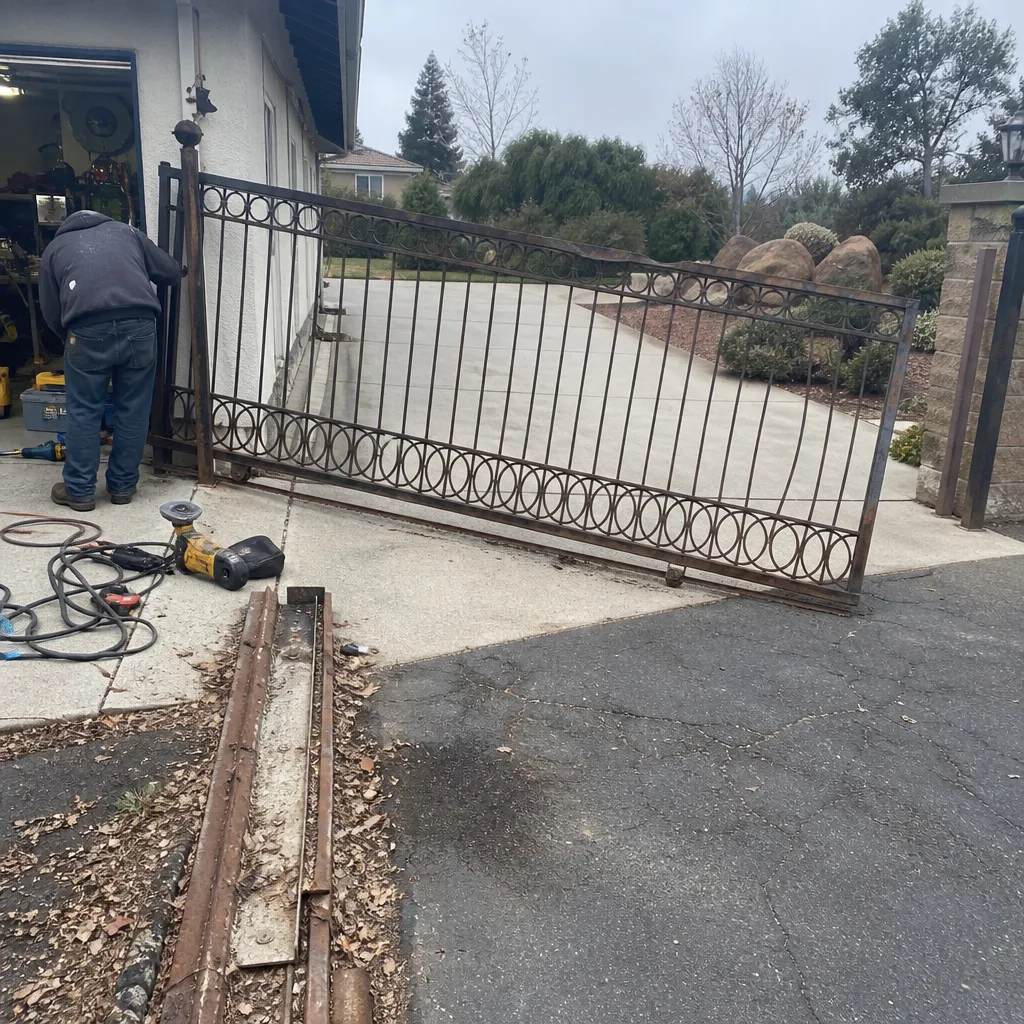 Before
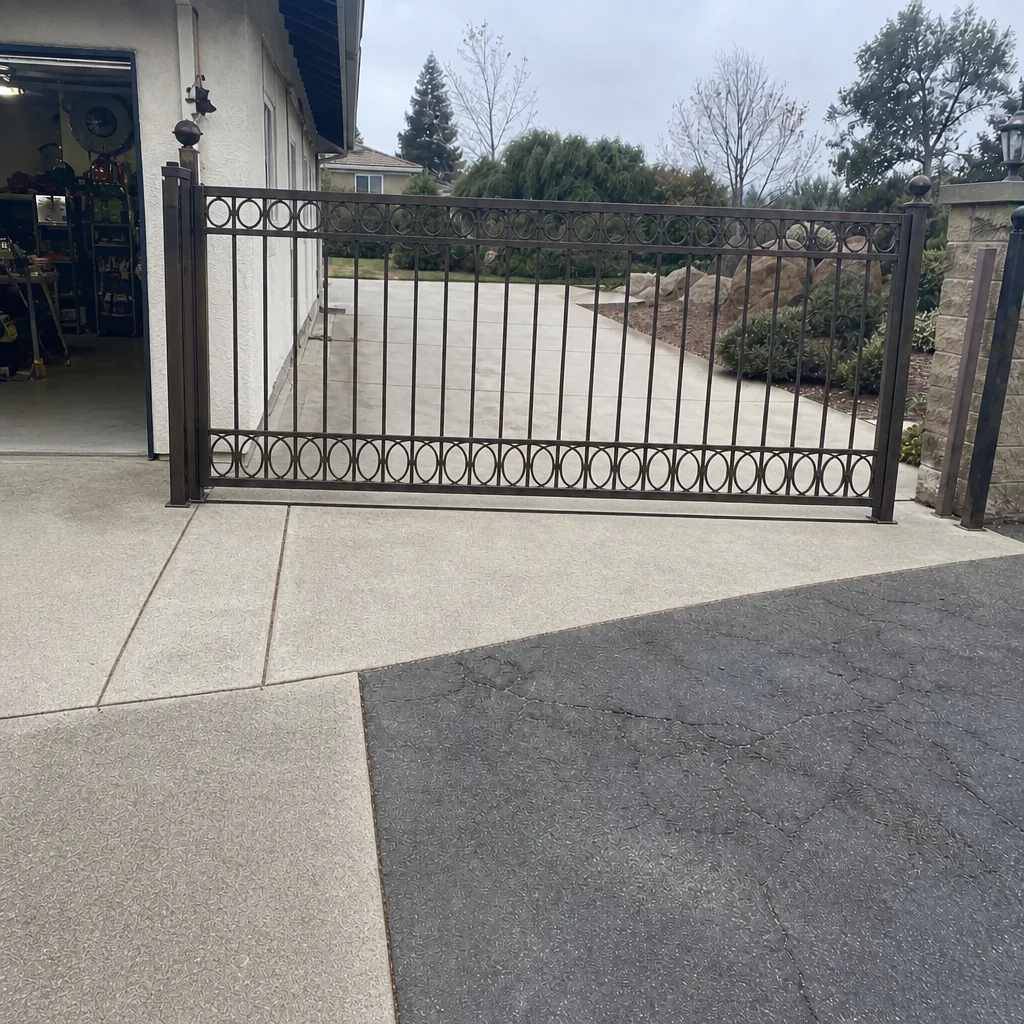 After
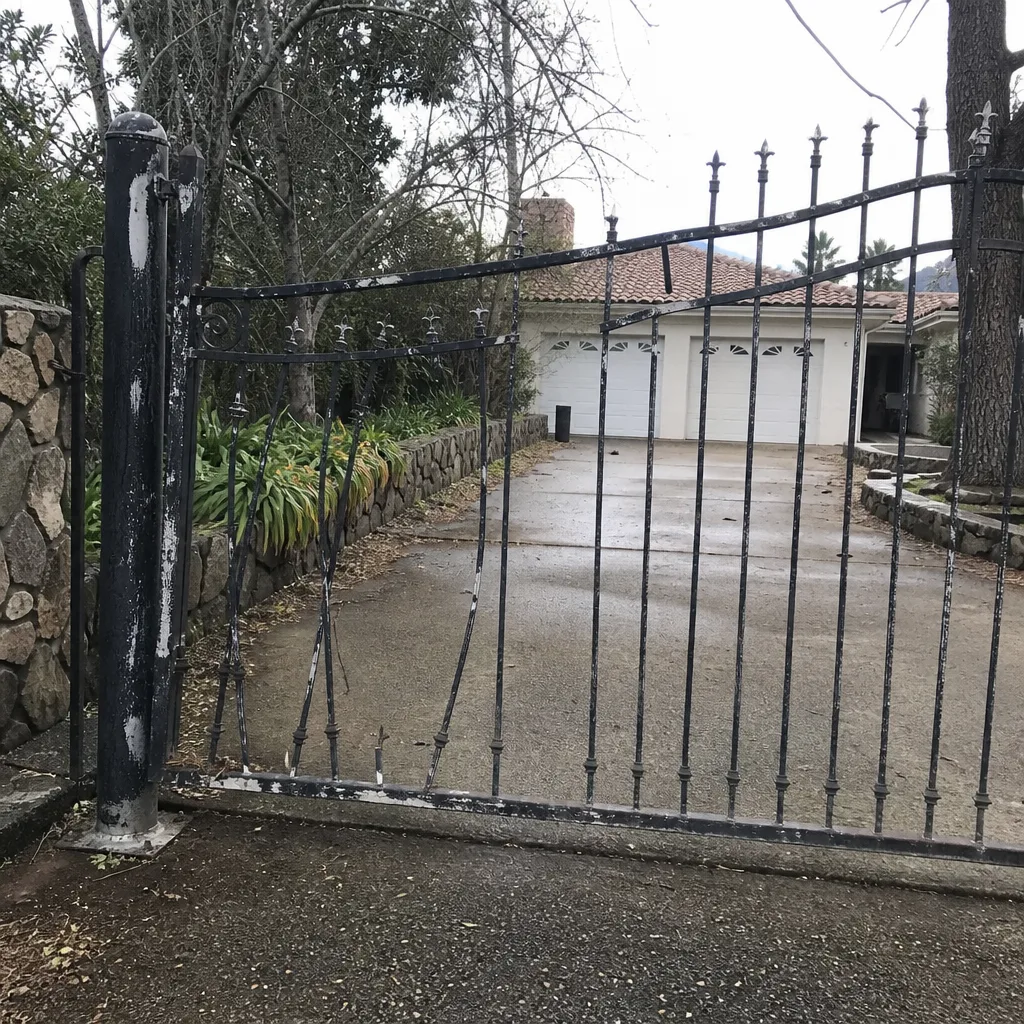 Before
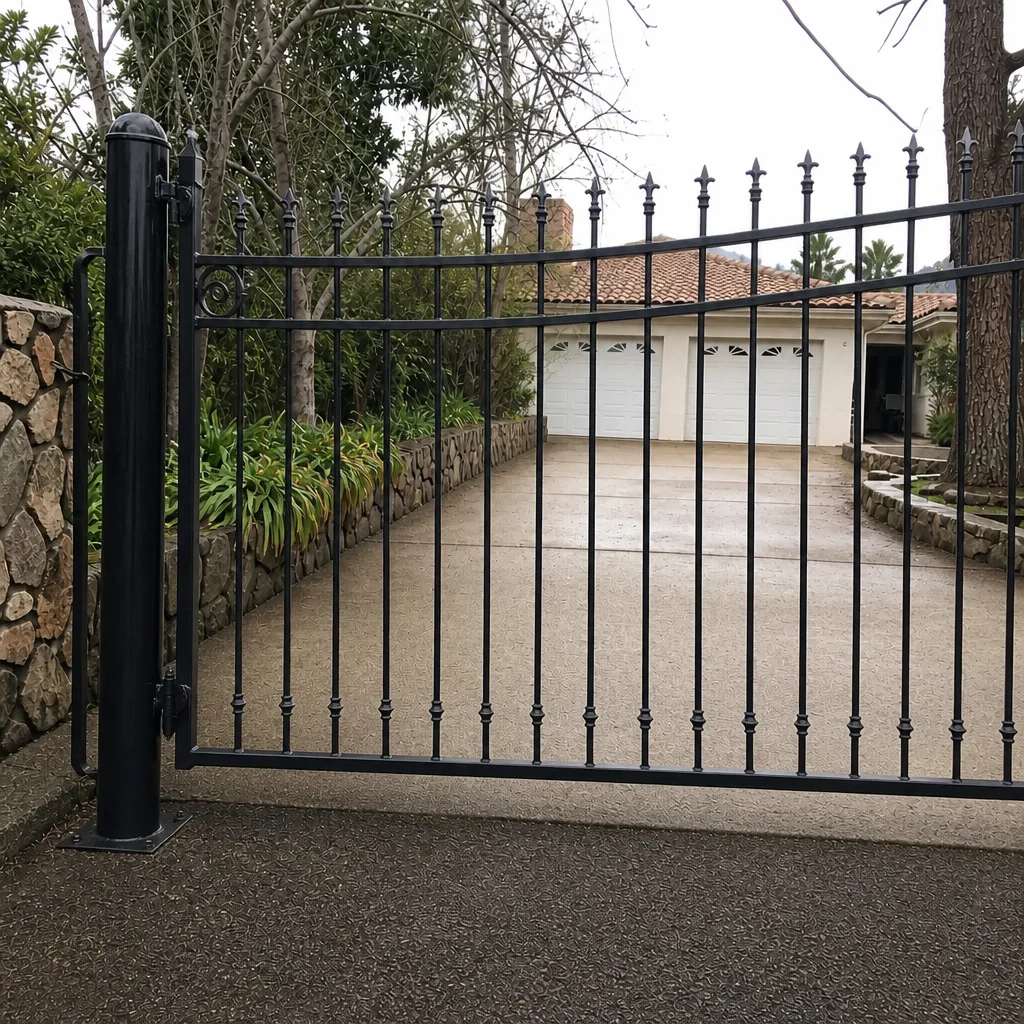 After
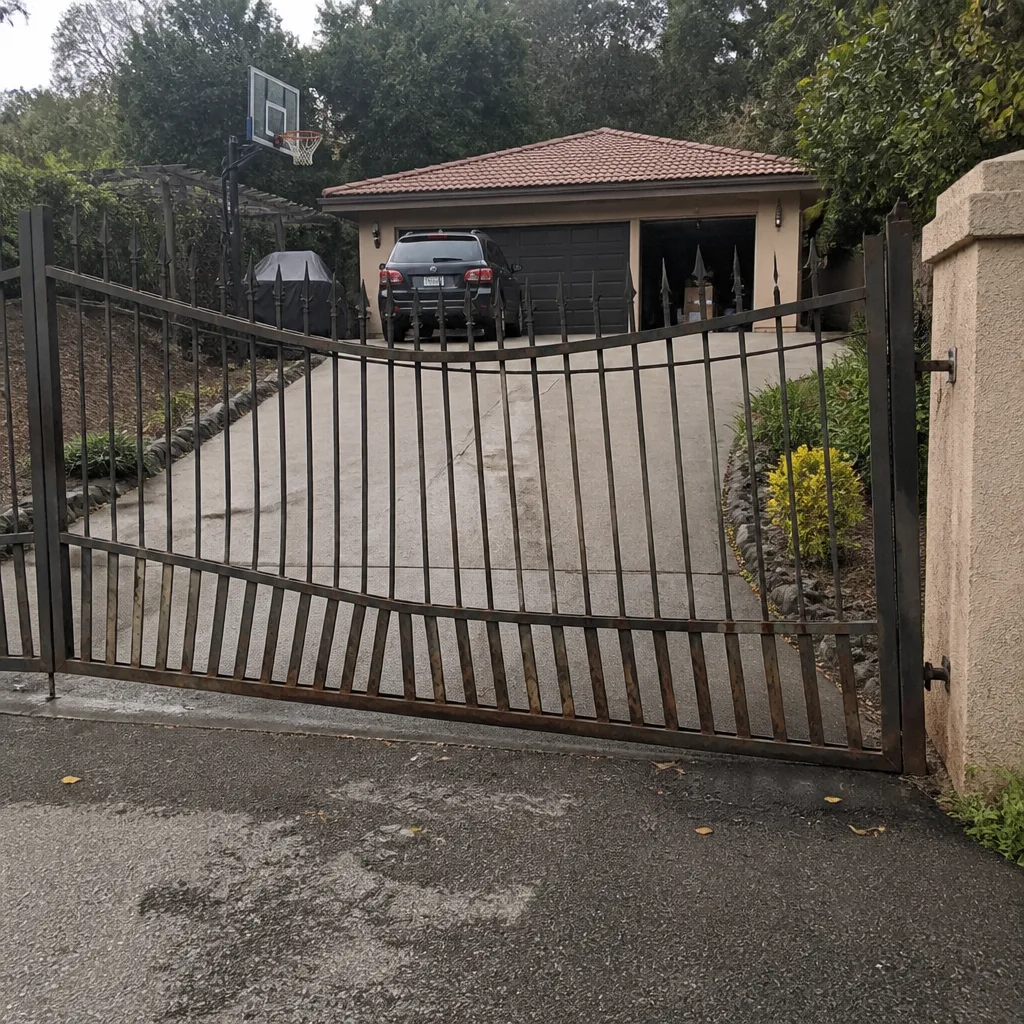 Before
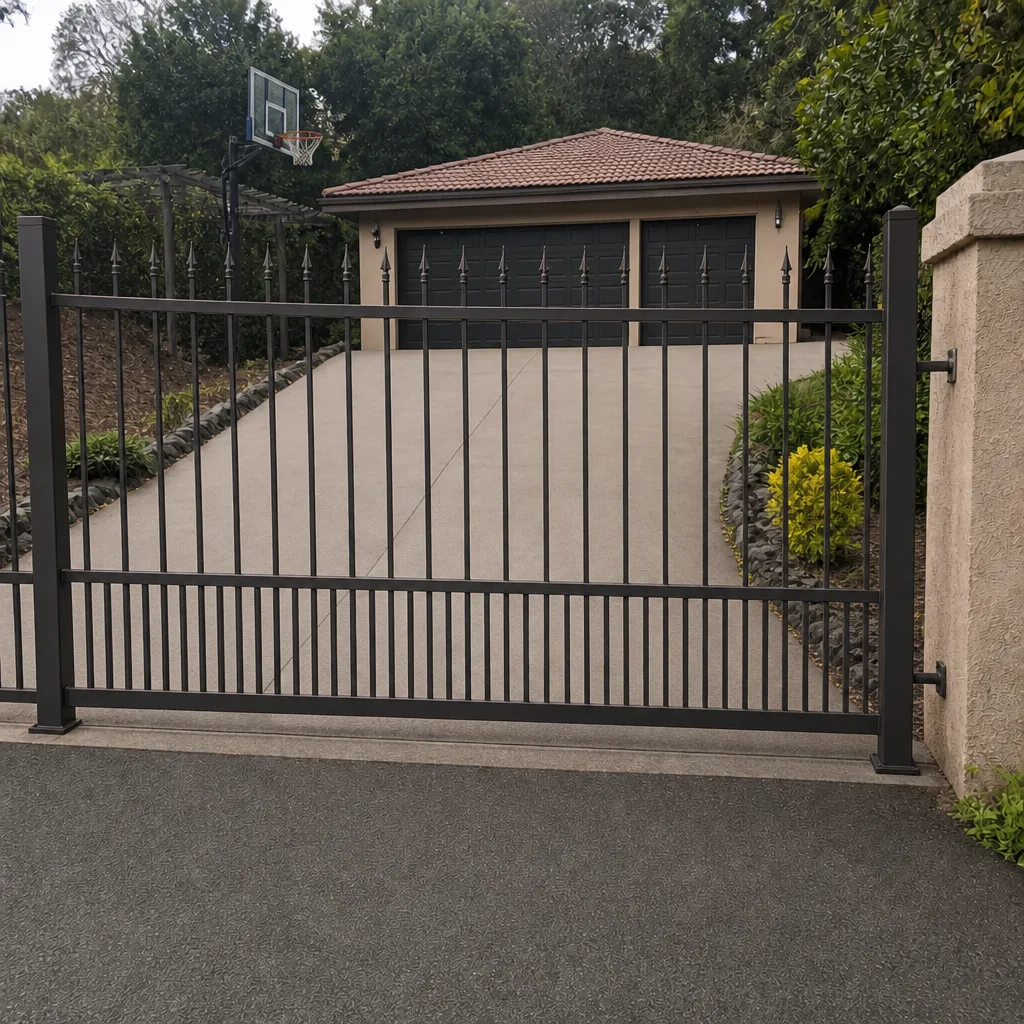 After
When to Call a Professional
Call a gate technician when you hear grinding or humming, when the gate reverses unpredictably, when it slams at the end of travel, or when you open the control cabinet and see heat marks or smell something burnt. These are signs of active mechanical or electrical failure, and continuing to cycle the gate makes them worse. If you’re not sure what lubrication your operator uses, don’t guess. If the gate is under warranty, check the terms before opening anything. If any task feels beyond your skill or the manual is missing, call someone who knows the brand. Gate Repair Folsom offers free estimates in Folsom. Call (833) 593-3926. We answer 24/7. Fast dispatch from 7am to 7pm.
Frequently Asked Questions
Lubricate hinge pins, rollers, and the operator chain or belt every 90 days in Folsom’s dust and heat. This replaces the lubrication before it breaks down and before dust creates an abrasive paste. Waiting for an annual tune-up leaves components running dry for much of the year. Call (833) 593-3926 if you want a technician to handle the lubrication with the right product for your brand.
You can and should do the monthly visual walkaround, clean the photocell lenses, and keep the track clear. Beyond that, the 90-day lubrication and annual electrical inspection involve brand-specific products and electrical safety. Opening the control cabinet or lubricating with the wrong product risks damage and injury. Leave internal electrical work to a trained technician.
We’re familiar with nine major gate and operator brands, including LiftMaster, FAAC, BFT, Linear, Viking, Ghost Controls, DoorKing, Elite, and Mighty Mule. That spans residential swing openers through commercial slide systems. We work on your brand, not just on generic gate hardware.
The motor works harder against increasing friction, runs hotter, and fails sooner. A grinding sound means metal-to-metal contact in dry bearings or rollers. A slowing gate means degraded lubrication or a straining motor. Continuing to run the gate compounds the damage. Stop using it and have a technician diagnose the problem before the repair bill grows.
A proper mechanical service includes lubricating all hinge and roller points with the correct product, tightening visible hardware, cleaning and aligning photocells, inspecting rollers and guide wheels, and clearing the full track bed. An annual electrical visit adds control board inspection, limit switch testing, loop detector checks, battery backup verification, and cabinet cleaning. The price is set per job after a written estimate.
We answer 24/7 and dispatch technicians from 7am to 7pm, Sunday through Friday, closed Saturday. Same-day service is often available. A call outside dispatch hours is booked into the next opening, Sunday through Friday, 7am to 7pm. Call (833) 593-3926 and we’ll tell you exactly what we can do.
The Bottom Line
Gate maintenance works when you separate it into layers and respect the intervals that match Carmichael’s heat and dust. Monthly walks catch change early. The 90-day mechanical service replaces lubrication before it’s gone. The annual electrical inspection catches board damage before summer tests it. Skipping any layer just shifts the failure forward and raises the repair cost. Most owners can handle the monthly checks. The 90-day and annual work belongs with a technician who knows the specific operator brand. Keep that schedule and your gate has years more service life in it than if you treat it as a once-a-year chore.
Written by the team at Gate Repair Folsom, serving Folsom since 2014.