
Last updated November 4, 2026
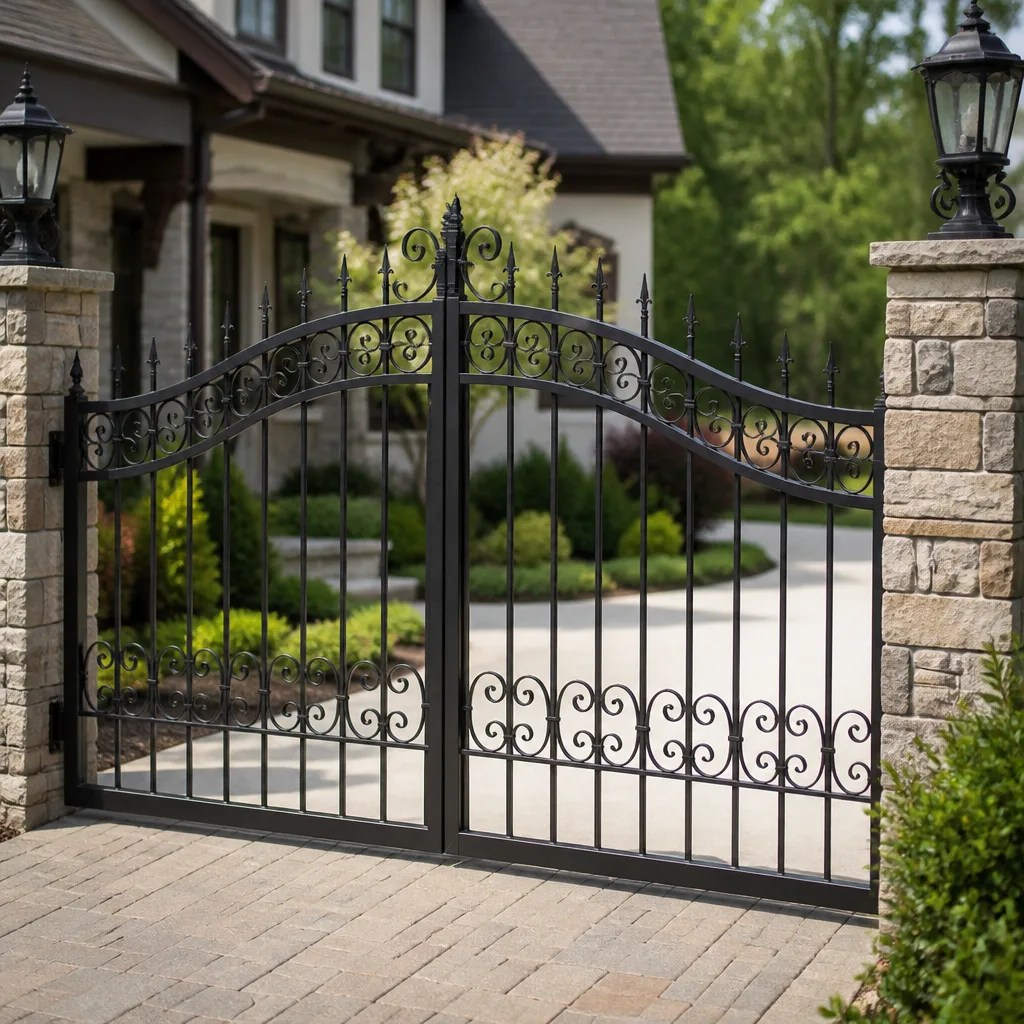 Wrought iron
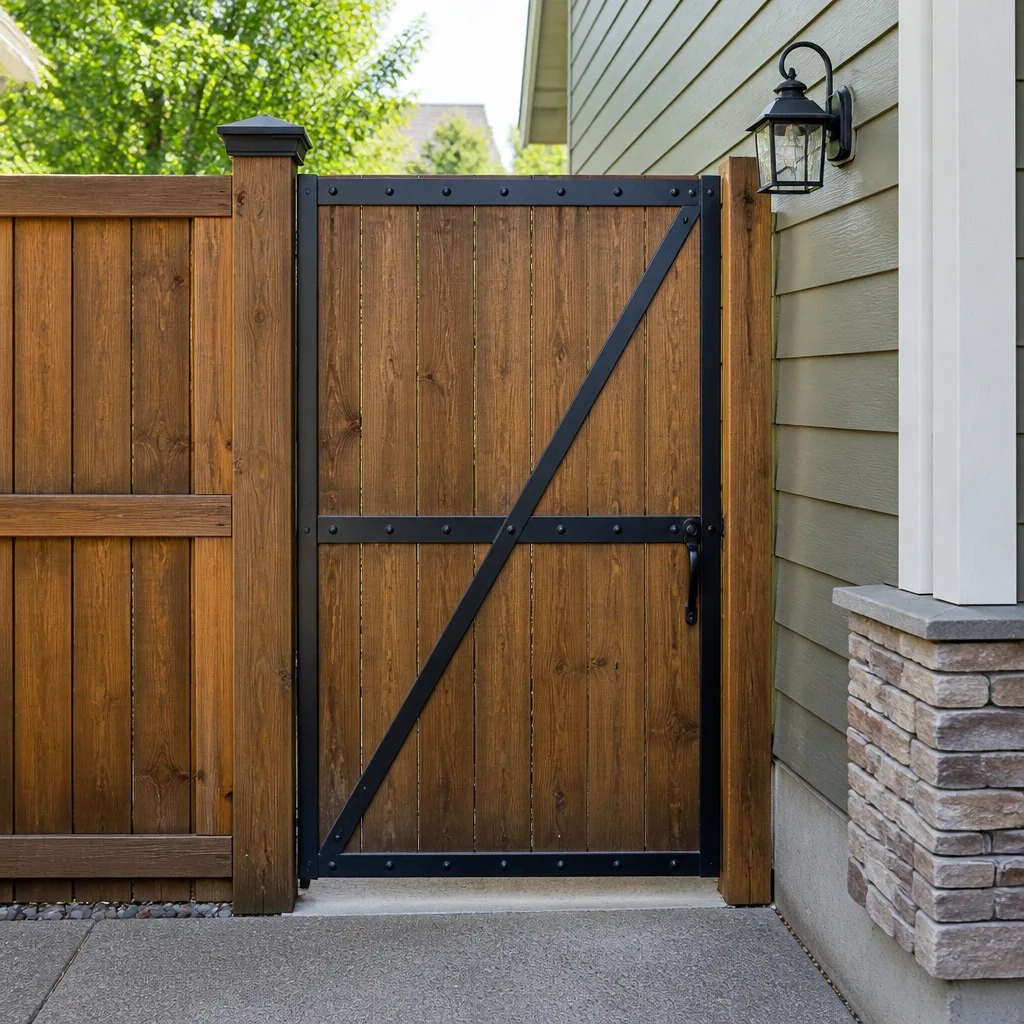 Wood & steel frame
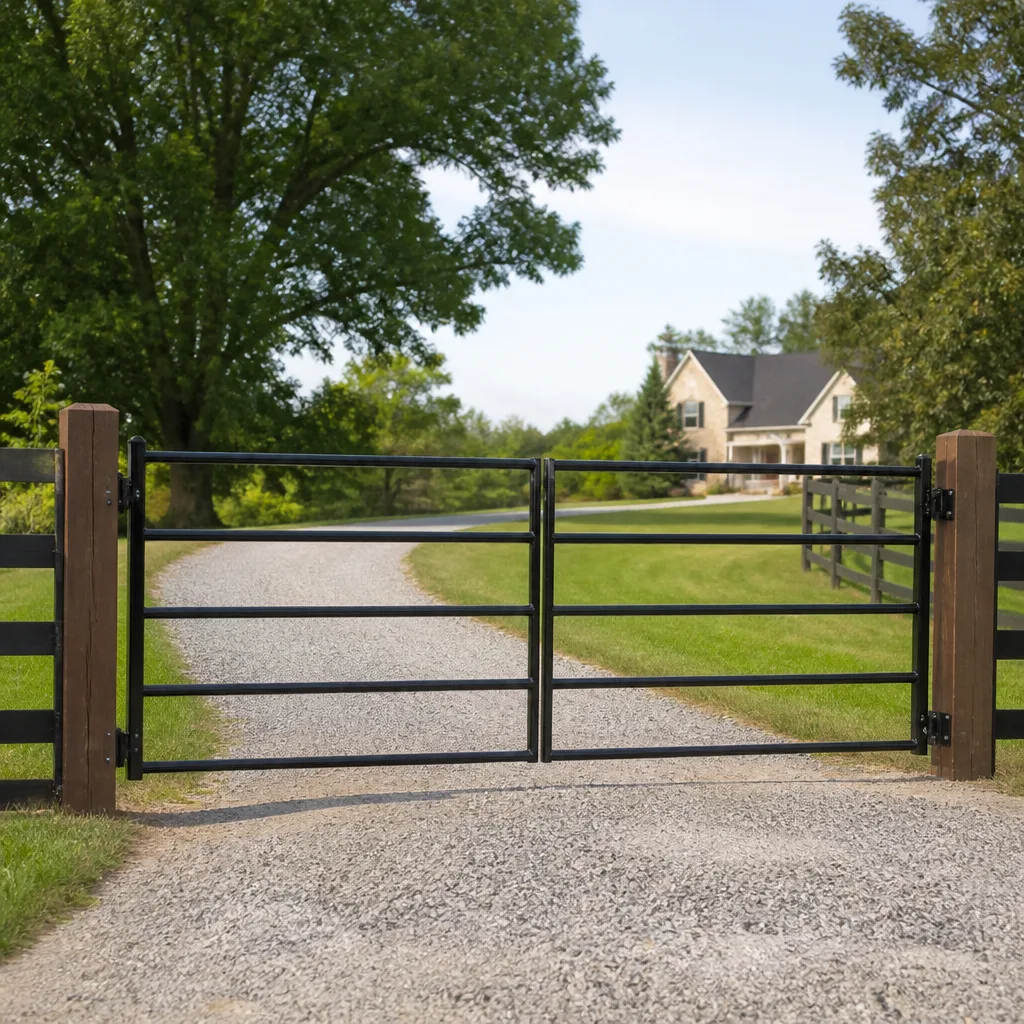 Farm & ranch
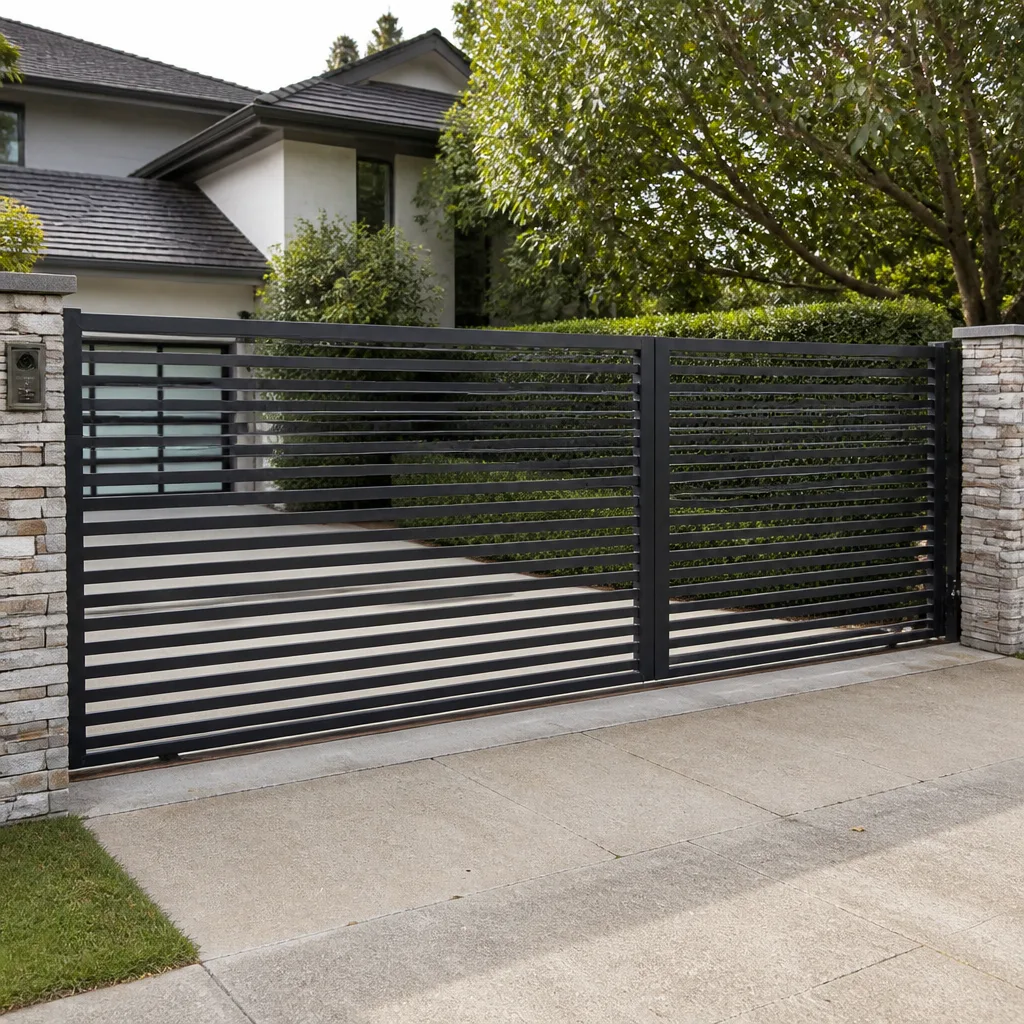 Sliding driveway gates
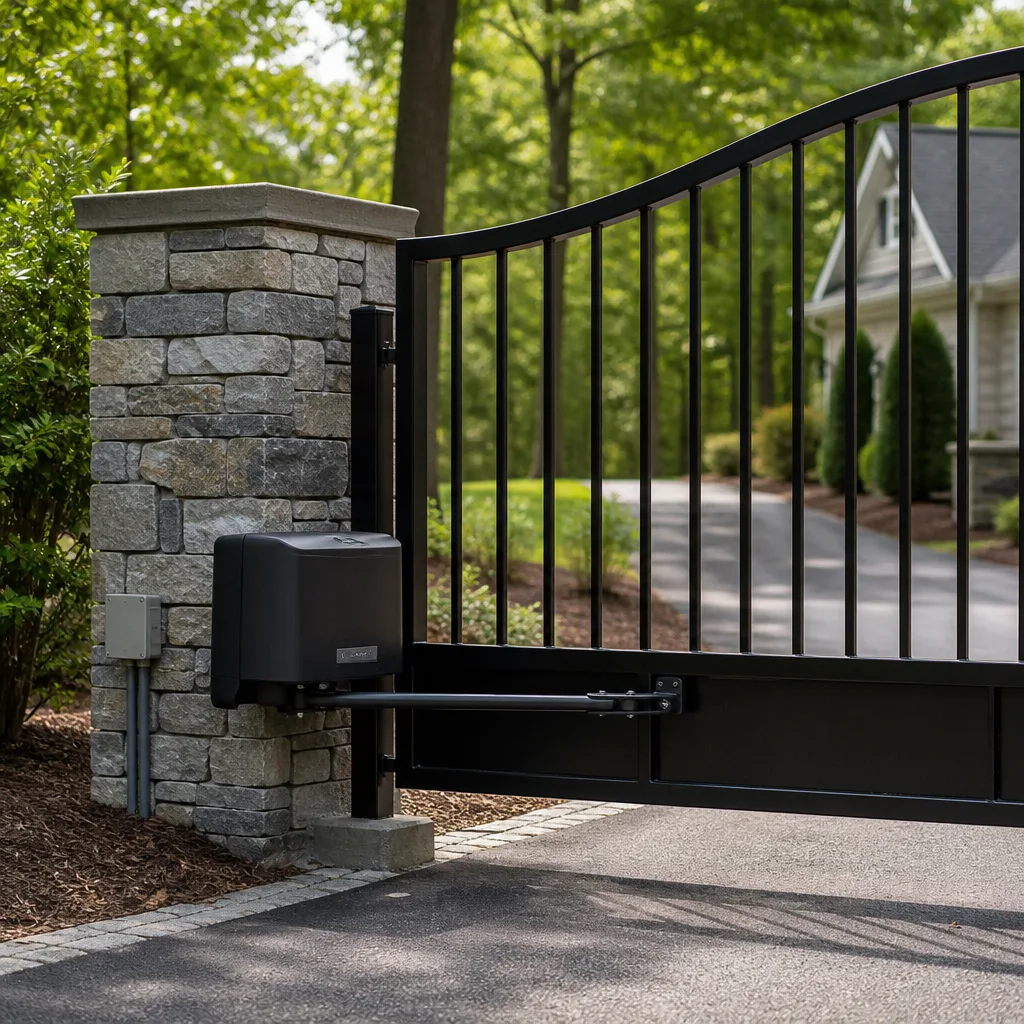 LiftMaster operators
Free on-site gate assessment - hinges, posts, and your LiftMaster or Nice gate operator checked before anything is quoted
The assessment is free and the quote is the invoice.
Get your free estimateGate Repair Permits, Codes & Inspections in Folsom, CA: What You Need to Know
Most Folsom homeowners who replace a gate operator don’t pull a permit, and most of the time nothing comes of it. The gate opens, the gate closes, life moves on. But the moment a gate injures someone, or a fire marshal needs emergency access, or an insurance adjuster starts asking questions, that missing permit becomes the center of the conversation. This guide walks through exactly when Folsom and the surrounding Sacramento County jurisdictions require gate permits, what UL 325 compliance actually demands, how HOAs add another layer of rules, and what an inspector will check when they show up at your property.
Quick Answer
Gate repair that swaps like-for-like parts, such as a control board or keypad, rarely needs a permit in Folsom. Replacing a gate operator, moving or modifying structural posts, or installing any automated gate near a public right-of-way generally triggers a permit requirement because California classifies operator installation as electrical work. When in doubt, call the City of Folsom Building Division before work starts. A five-minute conversation now prevents a liability mess later.
Styles & brands we work with
- Wrought iron
- Wood & steel frame
- Farm & ranch
- Sliding driveway gates
- LiftMaster operators
Table of Contents
- When Is a Permit Required for Gate Work in Folsom?
- UL 325: The Federal Safety Standard That Overrides Local Code
- HOA Gate Rules in Folsom and Carmichael Communities
- What a City of Folsom Inspector Checks on an Automated Gate
- The Paper Trail That Protects You
- Common Mistakes to Avoid
- When to Call a Professional
- Frequently Asked Questions
When Is a Permit Required for Gate Work in Folsom?
Folsom sits in Sacramento County, but the city issues its own building permits through the Community Development Department. The rule of thumb in Folsom is straightforward: repairs that replace an existing component with an identical or functionally equivalent part do not require a permit. A new keypad, a replacement control board, a fresh set of photocell safety sensors, a hinge swap, a welded crack repair on a steel frame. None of those require a trip to City Hall.
Where the permit line gets crossed is when the work changes the system’s electrical footprint, its structural integrity, or its relationship to the public right-of-way. Here is where Folsom homeowners and property managers most often misjudge the requirement:
- New operator installation: Installing a gate operator, even on an existing gate, is classified as electrical work under California building code. The operator needs a dedicated circuit, proper grounding, and a UL 325 compliant control system. Folsom treats this as a permitted electrical installation in most cases.
- Structural changes to posts or columns: If a post is replaced, reset in new concrete, or if a column gets welded extensions for a taller gate, that is structural work. Folsom requires a building permit for structural modifications to gate support systems.
- Work near the public right-of-way: Any gate that opens over a sidewalk, into a street, or across a public easement requires additional review. Folsom right-of-way encroachment permits exist precisely because a gate swinging into a public walkway is a public safety issue.
- Adding a pedestrian gate with automation: If an existing manual pedestrian gate gets an automated strike or operator added, that is new electrical work and falls under the same permit umbrella as a full operator install.
The practical takeaway for Folsom: if the job involves pulling wire, adding a circuit, cutting concrete for new posts, or touching anything within a few feet of a sidewalk or alley, call the Community Development Department and ask. We have walked clients through this process many times, and the city’s building division staff are generally helpful when you ask before work starts. Asking after the fact is a different experience.
It is also worth knowing that Folsom follows the California Building Standards Code Title 24, which incorporates the National Electrical Code. That means what applies in Folsom also generally applies in neighboring Carmichael, Rancho Cordova, and the unincorporated parts of Sacramento County. The specifics may differ at the margins, but the electrical classification of gate operators is consistent.
UL 325: The Federal Safety Standard That Overrides Local Code
Here is the part most homeowners, and honestly a fair number of contractors, never learn. Local permits and city codes are not the highest authority when it comes to automated gates. UL 325 is. This is a federal safety standard maintained by Underwriters Laboratories that governs the design, installation, and operation of automated gate systems in the United States. It was strengthened significantly after a series of entrapment deaths involving automated gates, and it applies whether or not a local permit was ever pulled.
UL 325 matters in Folsom for one reason that cuts through everything else: liability. If a gate injures someone, the question will not be whether the City of Folsom signed off on the permit. The question will be whether the gate system met UL 325 entrapment protection requirements at the time of the incident. If it did not, the property owner carries the liability, and their insurance company may have grounds to deny coverage.
What UL 325 requires on a typical Folsom residential or commercial gate system:
- Entrapment protection devices: Every automated gate must have at least two independent means of entrapment protection. This typically means photocell sensors across the gate opening plus an inherent or secondary reversal mechanism on the operator itself.
- Warning signage: UL 325 requires specific warning placards on both sides of the gate. These are not optional. They must be visible and legible.
- Proper operator class rating: Operators are rated by class, Class I through Class IV, based on usage levels. A residential swing gate needs a different class rating than a commercial slide gate at a Folsom apartment complex. Installing a residential-class operator on a commercial application is a UL 325 violation.
- Monitoring for entrapment sensors: External entrapment protection devices, meaning photocells and edge sensors, must be monitored by the operator control board. If a sensor is disconnected or fails, the gate must not operate.
- Gate speed and force limits: The gate cannot exceed specified speed limits, and the force exerted on an obstruction must trigger immediate reversal before reaching a dangerous threshold.
We work on gate operators from FAAC, BFT, Linear, and Viking among others, and every one of those manufacturers ships product that is UL 325 compliant when installed correctly. The key phrase is “when installed correctly.” A compliant operator wired to a non-compliant sensor layout does not make a compliant system. This is where professional installation matters. A Folsom homeowner who buys a used operator online and wires it into an existing gate has no way to verify the system meets the standard. And the standard is what the attorney will ask about after an incident.
One more point on UL 325 that catches Folsom property managers off guard. The standard is retroactive in a practical sense. The liability exposure exists from the moment the gate is installed or modified, not from the moment a permit is pulled. An unpermitted, non-compliant gate installed ten years ago is still a liability today. If you own a property with an automated gate and no record of its compliance, the right move is a professional safety evaluation now, not after an incident.
HOA Gate Rules in Folsom and Carmichael Communities
Folsom has a high density of HOA-governed communities compared to many Sacramento suburbs. Empire Ranch, Parkway, and the newer developments south of Highway 50 all have architectural review committees with opinions about gates. The same is true across the city line in Carmichael, where established neighborhoods with private roads and shared access points have their own governing documents. Here is the layer that confuses property owners: an HOA gate rule is not a building code. It is a private covenant. But it can still stop your project or force you to redo work at your own expense.
How the layers work in practice:
- City of Folsom code governs safety and permits. The city cares about electrical safety, structural integrity, and public right-of-way access. The city will not care what color your gate is.
- HOA covenants govern appearance and process. The HOA cares about gate height, material, finish, setback from the street, and whether the architectural review committee approved the design. The HOA will not care whether your operator meets UL 325.
- When they conflict: If an HOA rule conflicts with a safety obligation, the safety obligation wins. A city inspector will not waive a UL 325 entrapment protection requirement because the HOA’s approved design omitted photocells. And an HOA cannot require you to maintain a gate system in a way that violates fire code. Fire code access requirements always trump private covenants.
For Folsom and Carmichael property managers, the practical order of operations is: check the HOA’s design review process first, then pull the city permit, then schedule installation. Reversing the order means discovering after work is done that the HOA’s approved style differs from what was installed, and now there is a compliance fight to manage. We have seen this happen enough times that we tell every client with an HOA to get written approval before we order a single part.
The same applies to commercial properties in Folsom’s business parks and retail centers. A commercial property with a shared access gate, such as a self-storage facility or an office complex on Iron Point Road, may have an owner’s association or property management agreement that imposes design standards. And because commercial gates tend to be slide systems rather than swing arms, the right-of-way and safety sensor requirements are different. A slide gate that travels parallel to a public sidewalk still needs entrapment protection, and the city will want to see it during inspection.
If you need help navigating the intersection of HOA rules and city code, gate repair in this region follows the same layered approach. Our team handles the documentation side so the property owner does not have to interpret conflicting requirements alone.
What a City of Folsom Inspector Checks on an Automated Gate
When a Folsom building inspector arrives to sign off on a permitted gate installation, they are working from a checklist. The specifics vary slightly depending on whether the project is a residential swing gate, a commercial slide gate, or a pedestrian gate operator, but the core inspection points are consistent. Here is what we have watched inspectors evaluate on Folsom gate permits:
- Electrical installation: The inspector verifies the operator is on a dedicated circuit with proper disconnect means within sight of the operator. They check grounding, conduit, and wire gauge against the operator manufacturer’s specification sheet. Folsom inspectors are thorough on this point.
- UL 325 compliance labeling: The operator must carry its UL 325 listing label, and the inspector will look for it. The same goes for the entrapment protection devices. A photocell without its compliance label is a failed inspection item.
- Entrapment protection function: The inspector will test the gate by interrupting the photocell beam while the gate is closing. The gate must stop and reverse. They will also test the inherent reversal mechanism on the operator, usually by placing a test object in the gate’s path and confirming the operator stops before applying excessive force.
- Warning signage placement: UL 325 mandated warning placards must be visible on both sides of the gate, mounted at the required height, and legible. A missing placard is a failed inspection.
- Gate travel and stops: The inspector checks that the gate’s open and closed stops are correctly set, that the gate does not travel beyond its intended endpoints, and that no pinch points exist at the hinge or the closing edge.
- Manual release function: Every automated gate must have a manual release that allows fire personnel and homeowners to open the gate by hand during a power failure. The inspector will ask to see it function.
- Setback and right-of-way: If the gate opens near a sidewalk or street, the inspector verifies the swing path does not encroach on the public right-of-way. For slide gates, the travel path must remain clear of any public walkway or fire access lane.
This is not a rubber-stamp process. Folsom’s inspection division is known for being detail-oriented on automated gate installs, primarily because gate entrapment injuries tend to generate significant liability. A failed inspection means a correction notice, a re-inspection fee, and a delayed project. The fastest route through inspection is a gate installation that was done to the manufacturer’s specification and the UL 325 standard the first time.
Property managers should also know that commercial inspections in Folsom sometimes include a fire department review for emergency access. A commercial gate that blocks fire lane access during a power failure, or that lacks a Knox lock or fire department release, may face additional scrutiny beyond the building inspector’s checklist. Ask your installer about fire access requirements before the inspection date so the gate is ready on the first visit.
The Paper Trail That Protects You
Here is a scenario we have watched unfold in Folsom more than once. A homeowner sells a property with an automated gate installed ten years earlier. The buyer’s home inspector flags the gate as a potential liability because there is no record of a permit or a compliance check. The sale gets delayed, the seller gets asked to produce documentation they do not have, and everyone loses a week.
The documentation that protects a Folsom gate owner is simple to create and easy to lose if you do not know what matters:
- The building permit record: The City of Folsom keeps permit records online through its permitting portal. A closed permit for the gate installation is the single most valuable document a property owner can have when selling or defending a liability claim.
- Installer documentation: A professional installer should provide a written record of the work performed, including the operator’s make and model, the UL 325 compliance status of the system, and confirmation that entrapment protection devices were tested. For commercial properties, this documentation should also note the operator’s class rating and duty cycle.
- UL 325 compliance labels: The physical labels on the operator and sensors matter. Photograph them and keep the photos with the property records. These labels are the primary evidence that compliant equipment was installed.
- Inspection sign-off: A passed inspection from the City of Folsom, with the inspector’s final approval noted in the permit record, closes the loop. This is the document that stops most liability questions before they start.
- HOA approval letter: For HOA-governed properties in Folsom and Carmichael, the design review approval letter is part of the paper trail. It proves the gate complies with private covenants as well as public code.
This documentation matters most in two moments: when you sell the property and when someone gets hurt. In both moments, a gate owner with a complete paper trail is in a fundamentally different position than a gate owner who cannot produce any record of the installation. The gate itself may be identical. The legal exposure is not.
For more on how we approach gate documentation and compliance across the region, see our electric gate repair practice. We treat documentation as part of the job, not an afterthought.
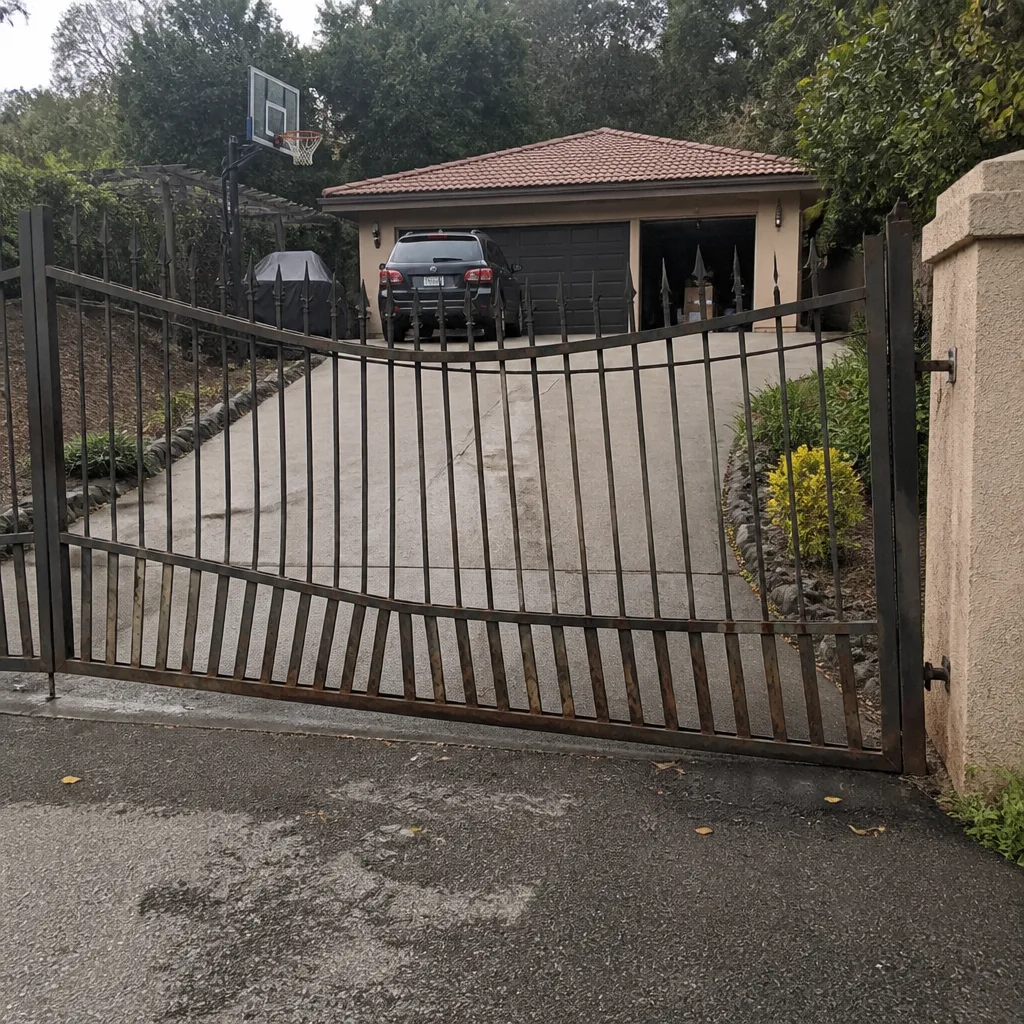
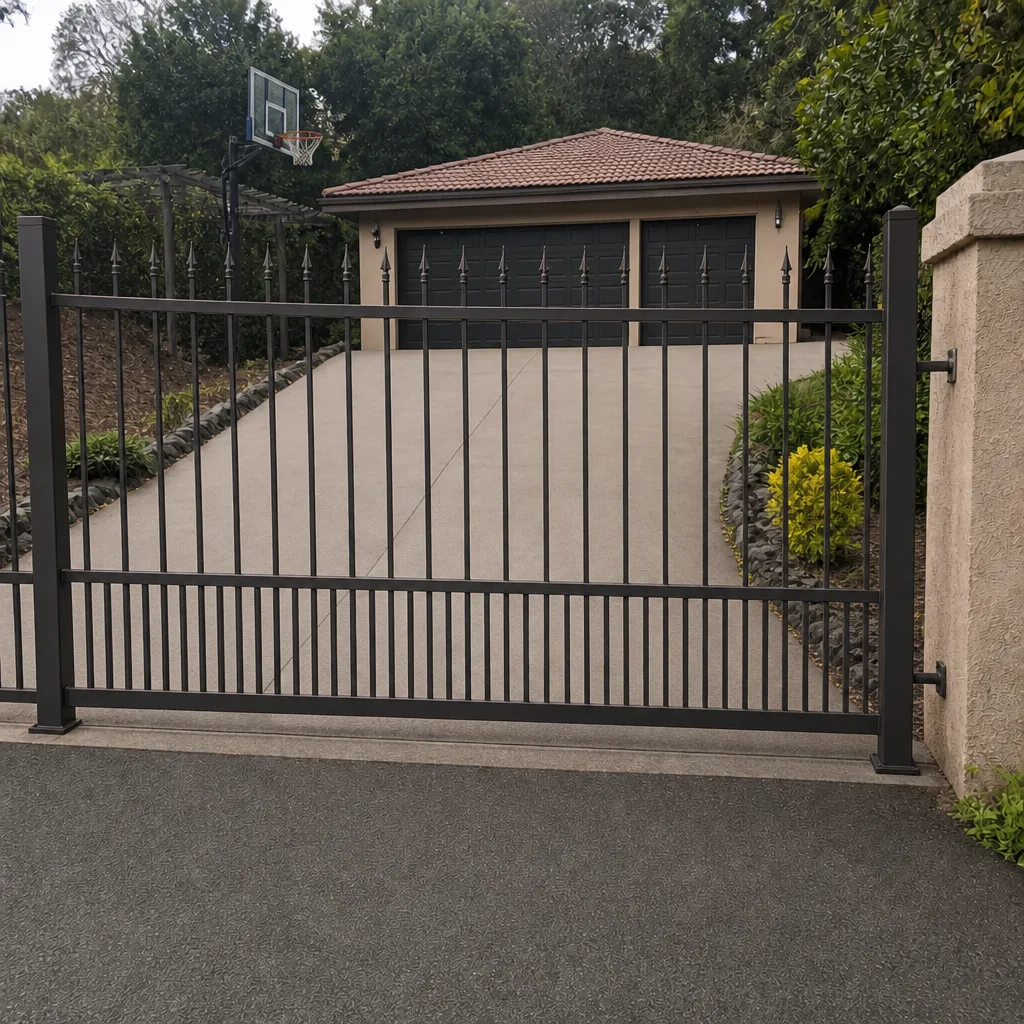
See the difference
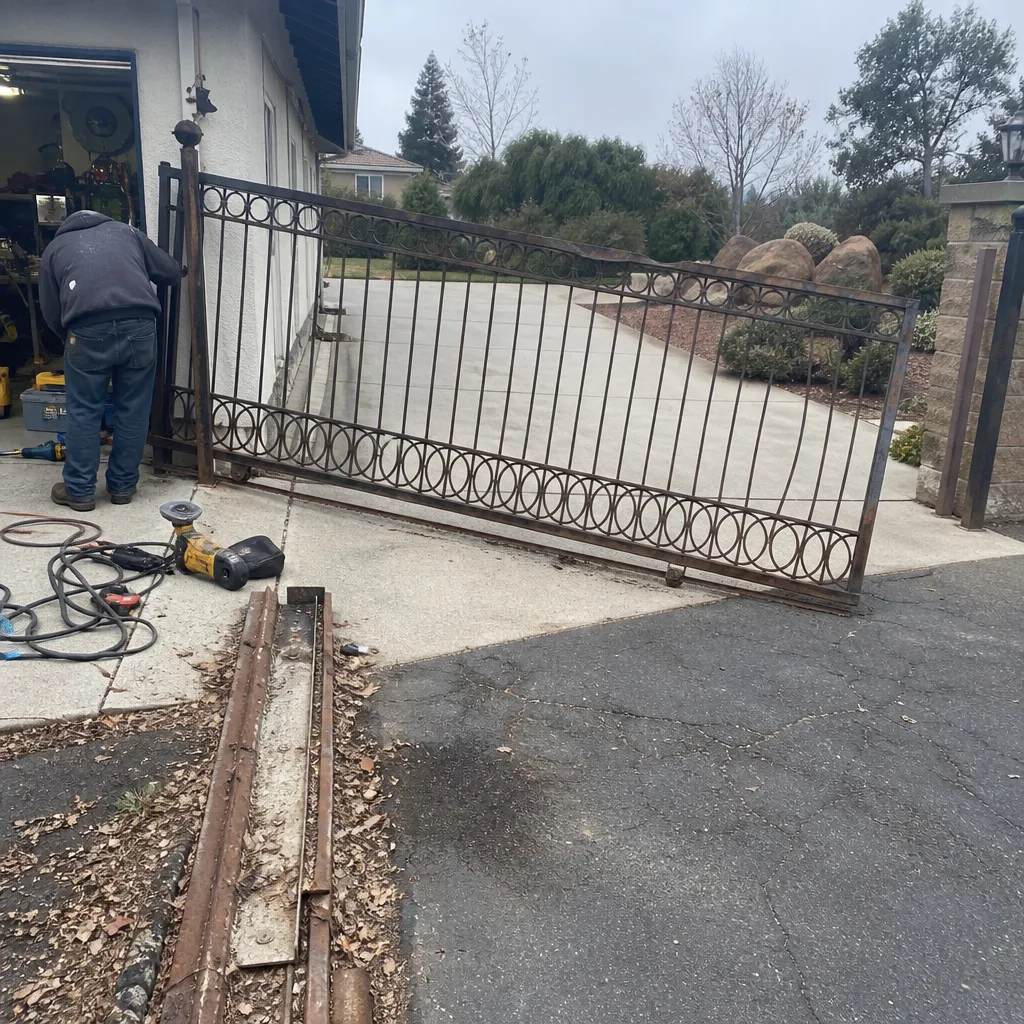 Before
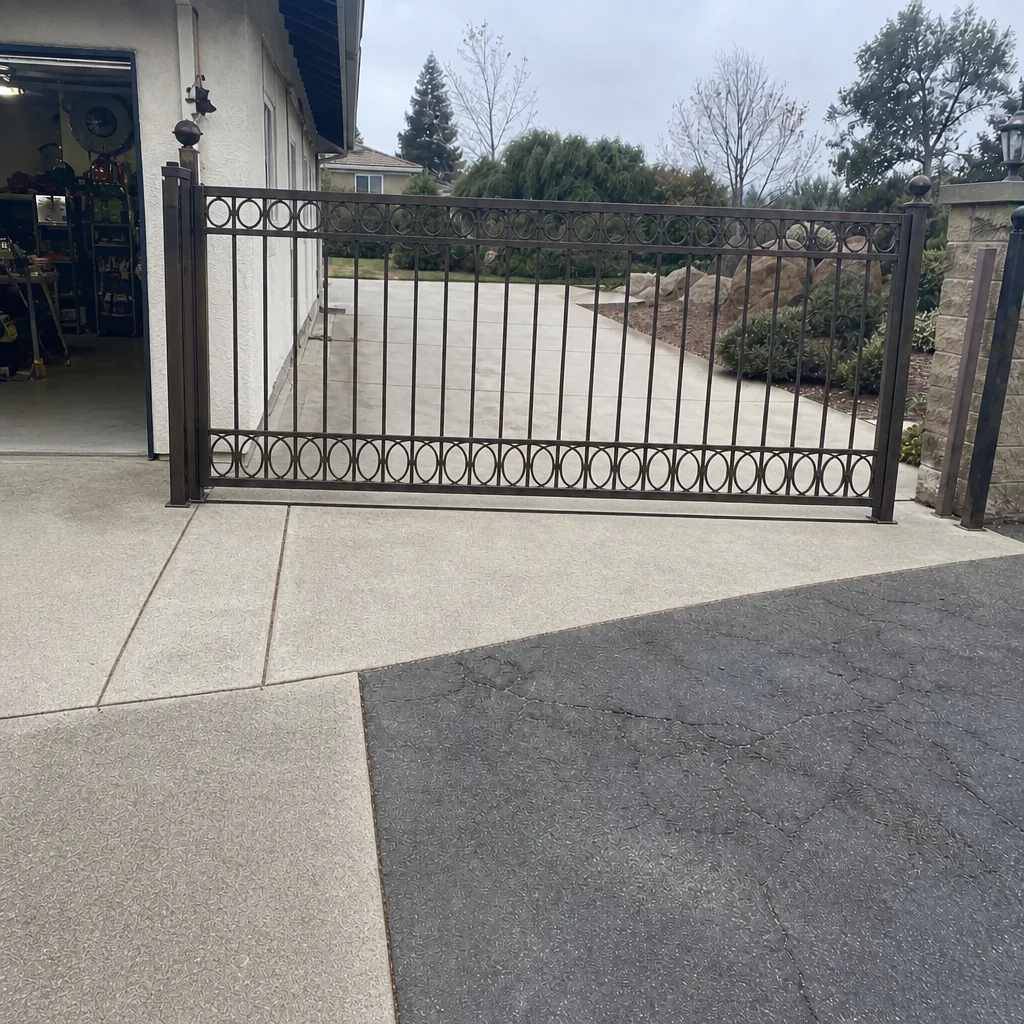 After
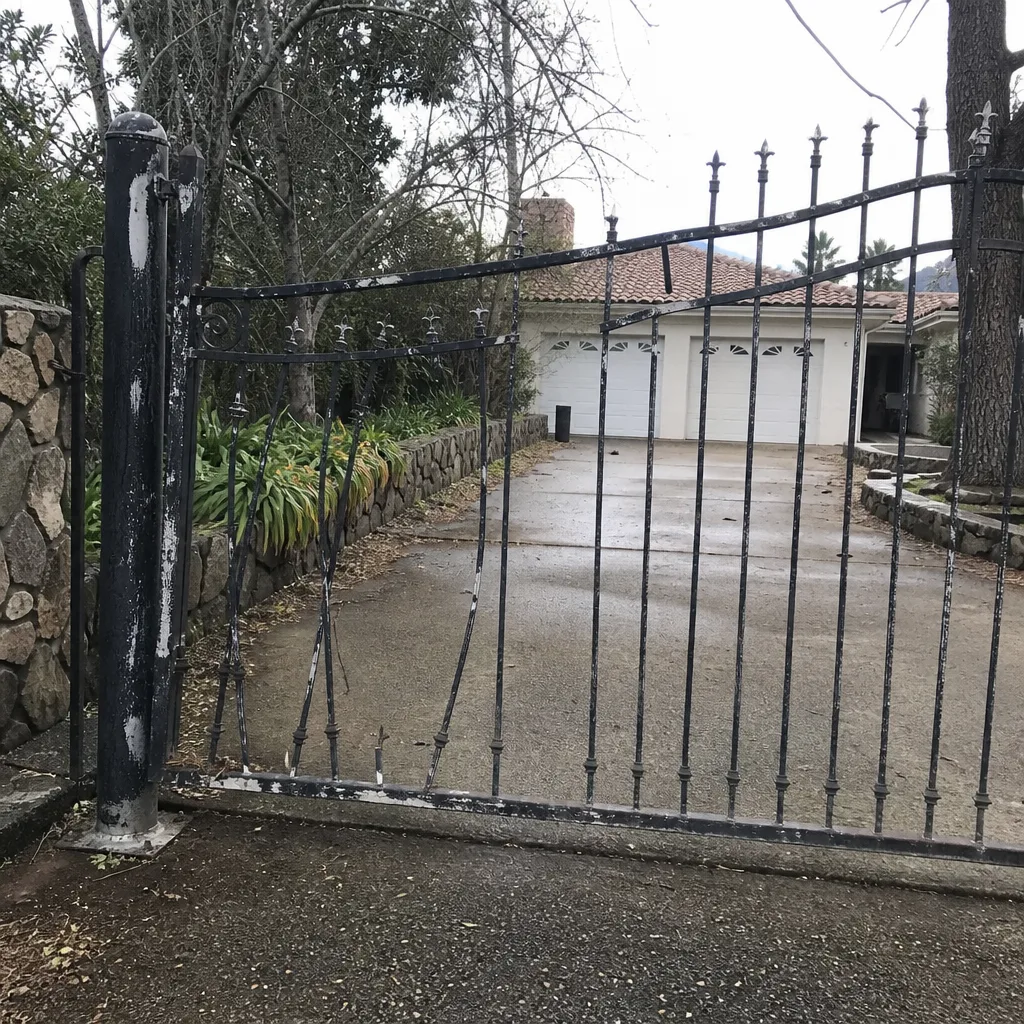 Before
 After
 Before
 After
Folsom’s Climate and How It Affects Gate Code Compliance
Folsom’s climate is warm and dry for most of the year, with summer temperatures routinely crossing 100 degrees. That has practical implications for automated gate systems that most national guides ignore. Heat kills electronics. A gate operator mounted in direct afternoon sun in a Folsom neighborhood like Broadstone or American River Canyon runs hot enough to shorten component life, which means the equipment is more likely to exceed its duty cycle rating or fail during a heat wave.
From a code and compliance standpoint, heat matters in two ways. First, it puts extra stress on the operator, which means an operator with an inadequate duty cycle rating will fail sooner, and a failed operator often gets replaced without a permit. Second, it affects sensor performance. Photocells mounted at ground level in direct sun can false-trigger or fail outright, which compromises the UL 325 entrapment protection system. An inspector evaluating a Folsom gate that has baked in the sun for a few summers will look closely at whether the sensors and operator are still functioning within spec.
The takeaway for Folsom property owners is to treat gate maintenance as a seasonal consideration. A gate that works fine in March may struggle by August. And when a heat-weakened operator gets replaced, the permit question comes up again. Do not let a heat wave push you into an unpermitted emergency swap. Plan the replacement, pull the permit, and keep the paper trail clean.
We also serve Carmichael, where similar heat patterns apply, and the same compliance logic holds. The climate does not change the code, but it changes how quickly a non-compliant system shows its weaknesses.
Common Mistakes to Avoid
- Skipping the permit on an operator replacement. This is the most common mistake in Folsom. The homeowner sees the same gate, the same posts, and a new operator as a simple swap. The city sees it as electrical work. Pull the permit.
- Assuming an HOA approval replaces a city permit. HOAs and cities govern different things. Getting a design review sign-off from your Folsom HOA does not satisfy the Community Development Department, and the converse is also true.
- Installing a used or salvaged operator without verifying UL 325 compliance. A used operator from a swap meet or online marketplace may no longer carry its compliance label, and without the label the system cannot pass inspection or defend against a liability claim.
- Omitting entrapment protection because the gate “barely moves.” Even a slow-moving gate can entrap a child, and UL 325 does not exempt slow gates from sensor requirements. This is a hard requirement, not a suggestion.
- Mounting warning placards incorrectly. UL 325 specifies placement. A placard on one side of the gate, or mounted too low to read, fails inspection just as surely as no placard at all.
- Modifying structural posts without engineering review. Cutting a post, welding on an extension, or changing the hinge geometry alters the load path. Folsom treats this as structural work, and an unpermitted structural modification is a significant liability on resale.
- Ignoring the fire access requirement on commercial gates. Folsom commercial properties with automated gates are subject to fire department access requirements. A gate that blocks a fire lane during a power failure is a code violation that can carry hefty fines.
When to Call a Professional
A gate permit is not a DIY project, not because the paperwork is hard but because the liability of getting it wrong is concentrated. The moment an automated gate enters the picture, you are responsible for a system that can crush, entrap, or strand someone. If your gate operator is being replaced, if structural posts are being modified, if the gate opens toward a public sidewalk, or if you inherited a gate with no documentation and no record of compliance, call someone who does this every day. Gate Repair Folsom offers free estimates in Folsom, and we will walk you through the permit question before any work starts. Call (833) 593-3926. We answer 24/7. Fast dispatch from 7am to 7pm, Sunday through Friday.
Frequently Asked Questions
In most cases, yes. Replacing a gate operator is classified as electrical work under California building code, and the City of Folsom generally requires a permit for new operator installations even when the gate itself is unchanged. Repairs that swap like-for-like parts such as a control board or keypad typically do not require a permit. Call the Folsom Community Development Department to confirm for your specific situation, or call us at (833) 593-3926 and we will help you sort it out. The last sentence of any permit question should be a call, not a guess.
UL 325 is the federal safety standard that governs automated gate systems, including entrapment protection, operator class ratings, and warning signage. It matters because it applies whether or not a local permit was pulled, and a gate that is not UL 325 compliant creates serious liability exposure for the property owner even if the city never inspects it. If your gate lacks photocells or a functioning reversal mechanism, it is not compliant, and the problem compounds with time. Call (833) 593-3926 for a free estimate on bringing your gate into compliance.
No. HOA rules govern appearance and design review, while the City of Folsom governs safety, permits, and electrical compliance. Where they conflict, safety and code requirements take precedence. An HOA cannot waive a UL 325 safety requirement, and a city permit does not exempt you from HOA design review. You need both approvals before work starts on an HOA-governed property.
A City of Folsom gate inspection covers the electrical installation, UL 325 compliance labels, entrapment protection function, warning signage, gate travel and stops, the manual release mechanism, and right-of-way clearance. The inspector will physically test the gate by interrupting the photocell beam and confirming the operator reverses. A failed inspection means corrections and a re-inspection fee, so the goal is to get it right the first time.
The timeline varies by project scope and current city workload. Simple residential operator permits can process in a few weeks, while projects involving structural changes or right-of-way encroachment take longer because they require additional review. Ask the Community Development Department for a current estimate when you submit. For planned installations, we help clients understand the sequence and paperwork so the permit process does not stall the project.
You can physically install it, but you are taking on liability that no permit fee is worth avoiding. An unpermitted operator installation means no inspection, no verification of UL 325 compliance, and likely no insurance coverage if the gate injures someone. When you sell the property, the missing permit becomes a disclosure issue. The financial downside of skipping a permit dwarfs the cost of pulling one. Call (833) 593-3926 and we will quote the job properly, permit included.
The Bottom Line
Gate permits in Folsom are not bureaucratic busywork. They are the mechanism that verifies your automated gate is safe, compliant, and defensible. The electrical classification of operator installation means most operator replacements require a permit, and UL 325 compliance is the real safety standard regardless of local code. HOAs add a design layer, not a safety exemption. The paperwork you keep, from the permit record to the inspection sign-off to the UL 325 labels, is what protects you when a sale or an injury puts your gate under scrutiny. Pull the permit, keep the records, and keep the gate safe.
Written by the team at Gate Repair Folsom, serving Folsom since 2014.